Book Online
07400454839
Saving a VW T25 from the scrapper: a Cardiff welding case study
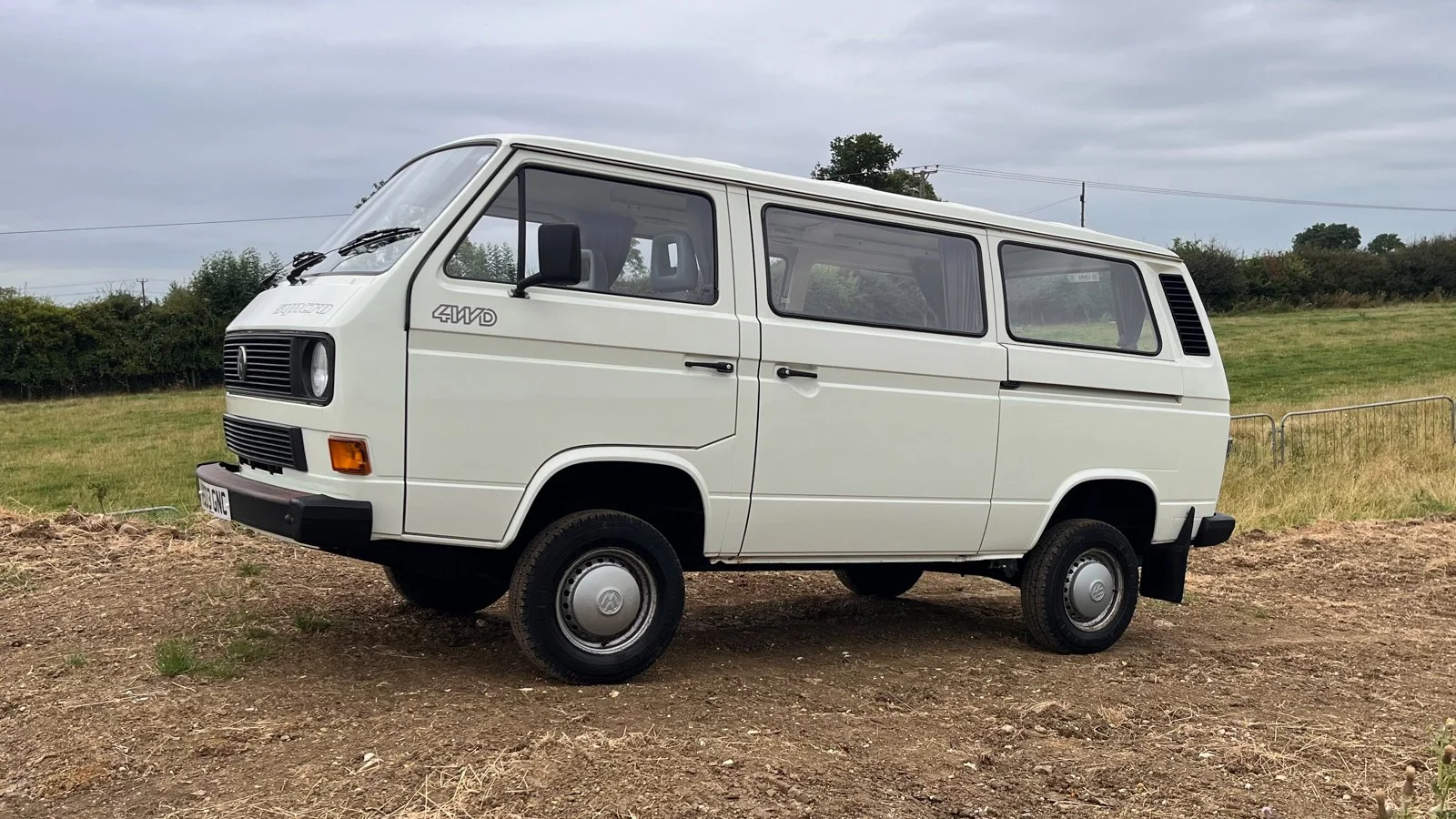
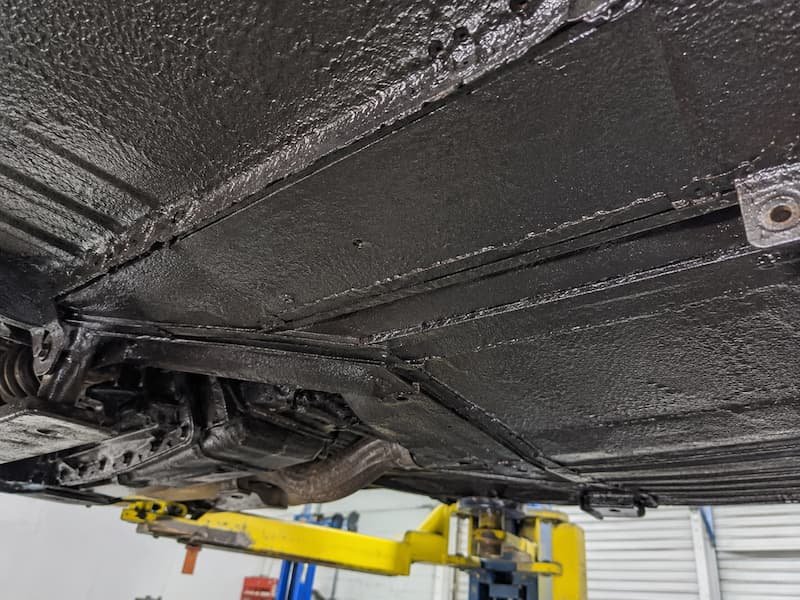
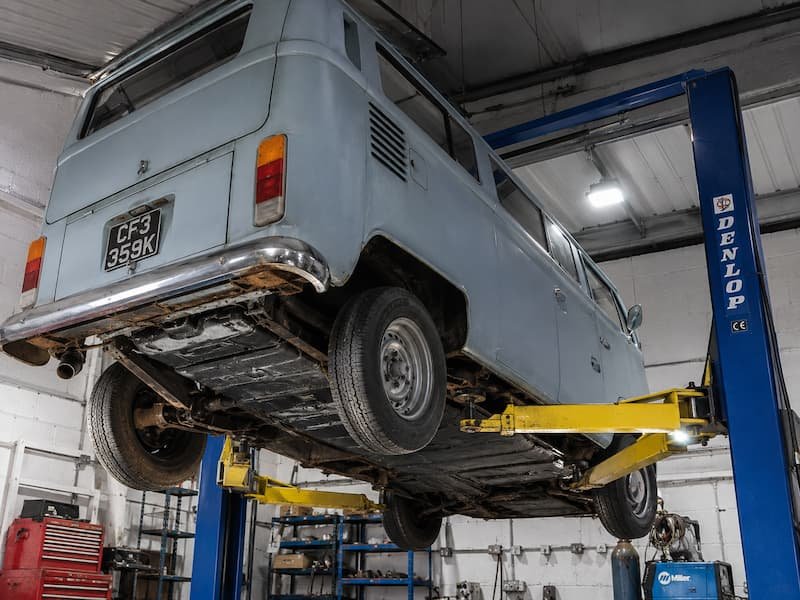
A white Volkswagen T25 came into our Rumney workshop for a proper look underneath, and the ramp found corrosion on both faces of the same structure: scaly rust bleeding bright red along the nearside sill to floor seam outside, and scaly orange corrosion on the seat base bracketry inside. That is a cutting and welding job, not a wire brush job, and it sits in the part of a vehicle the MOT treats as structural. This piece walks the route the technician's camera took, says what each finding means, and sets out how corrosion like that gets repaired rather than painted over for another twelve months.
One thing to be straight about first. We are publishing at the point the work was specified and agreed, so there are no finished weld photographs here yet.
Rust showing along a sill, a step edge or a body mount on your own vehicle? Book it in for structural welding work in our Rumney workshop, where we cut back to sound metal and weld in fabricated sections instead of plating over the problem.
- The corrosion on this van is present on the outer face and the inner face of the same structure, which tells you it has been working from the inside out for years.
- The finding that matters most is the outrigger to sill junction, where the seam has opened along its length. A joint that has separated cannot be filled or sealed. It has to be cut and rewelded.
- Brake and fuel lines are clipped directly to the worst of the corroded seam, which turns a bodywork problem into a braking safety problem.
- Surface scale, perforation and joint separation are three different conditions with three different answers, and this van has all three.
- Corrosion inside 30cm of a prescribed area, meaning a suspension, steering, braking or seat belt mounting point, is assessed as structural whatever it looks like from a distance.
- Nobody can quote the full extent of a corrosion repair before cutting starts, so a proper job is quoted and agreed in stages.
- Sealing over active rust does not stop it. It hides it and it holds moisture against it.
What arrived in the bay, and why an old van earns a proper look underneath
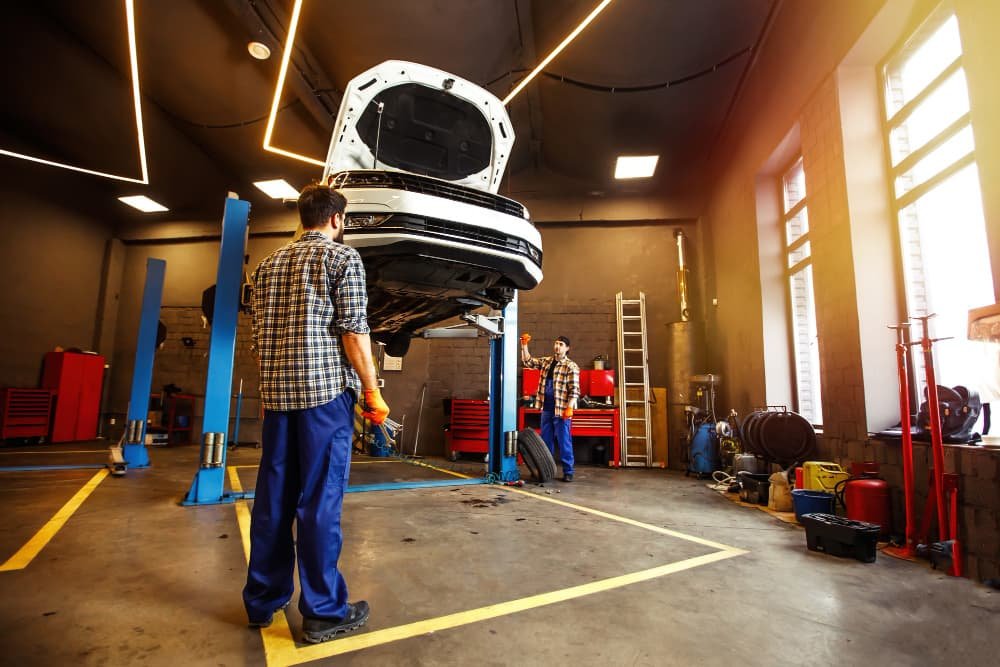
The van is the square front water cooled T25, the shape with twin rectangular headlights and the black lower grille, white, late in the model run. It came in with the cab door open, one of our trade plates on the front and a weight plate sticker in the corner of the windscreen, parked in a bay with the red tool chest, a jack and the roller shutter behind it.
From the outside it presents well: tidy paint, straight panels, the sort of van a buyer would take at face value.
That is the problem with vehicles of this age. A T25 carries its structure in pressed steel box sections that trap water, road salt and grit, and the parts holding the suspension, the seats and the body together are the parts you cannot see from standing height. Opinions about rust are worthless. A torch, a ramp and something blunt to tap with are not.
So this one got a defined inspection rather than a glance, and our technician filmed the whole underside walking it.
How is a corrosion inspection actually carried out.
Ramp first, always. The van goes onto the two post lift and up to head height, so the technician looks straight at the sills. Half the corrosion missed in this trade is missed on a creeper with a phone torch.
The order matters as much as the light. We start at the nearside front and work backwards along the sill, because the nearside takes the kerb spray, the standing water and the salt off the gutter, and it fails first on nearly every vehicle we see. From there it moves inboard to the floor pan, the body mounts, the outriggers, the jacking points, the inner arches, the suspension mounting points and the rear chassis rails.
Then the part a photograph cannot do. A light tap with a blunt instrument tells you whether you are looking at scale on sound metal or a crust sitting on nothing. Sound steel rings. Rotten steel gives, sounds dead, or opens up.
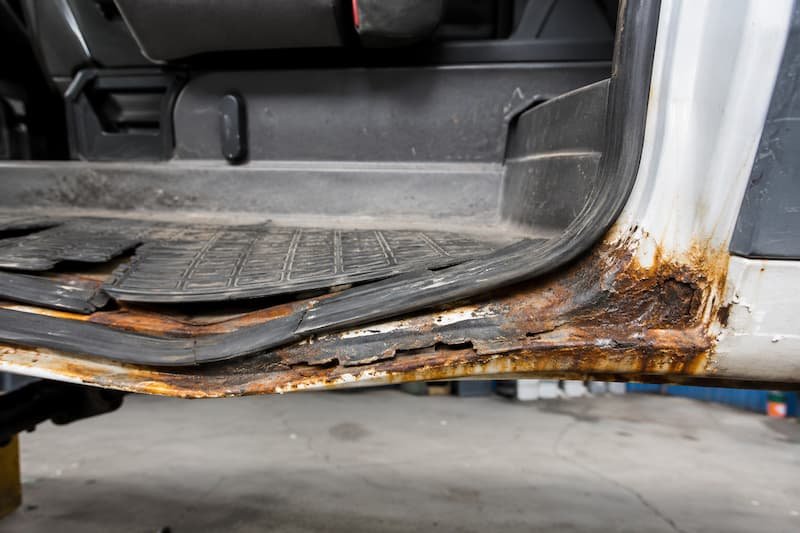
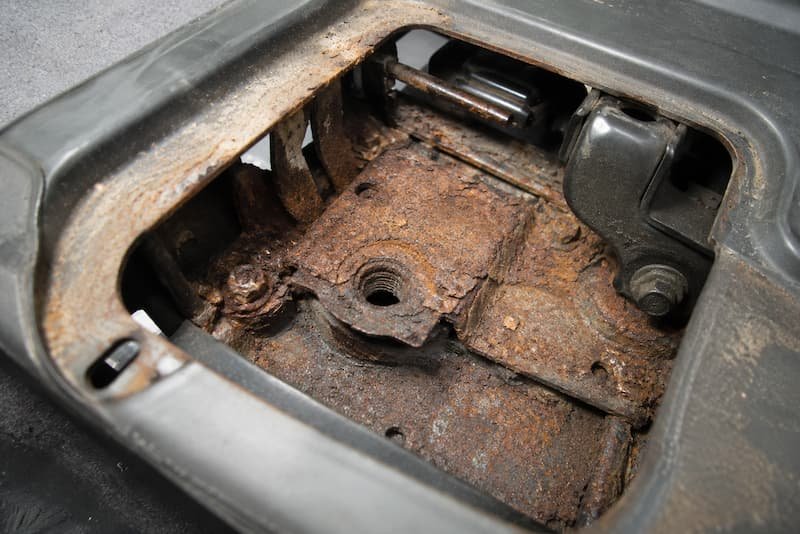
The inner face gets its own pass, and on this van it earned one. The cab step shows rust blooming along its front edge, the rubber tread lifting away from the metal, corrosion tracking under the pressing, and bubbling at the base of the B-post where it meets the sill. Down inside the seat base aperture, the internal bracketry and a mounting point carry scaly orange corrosion. Same structure, other side of the steel.
Anyone with a test date close is better off having this done as a pre MOT check before the test date than finding out on the day.
What did the underside show, section by section.
Nearside sill to floor seam
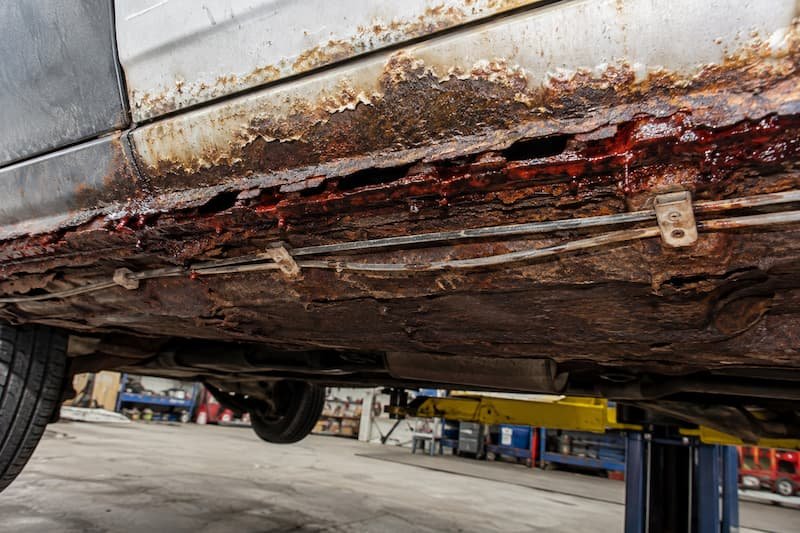
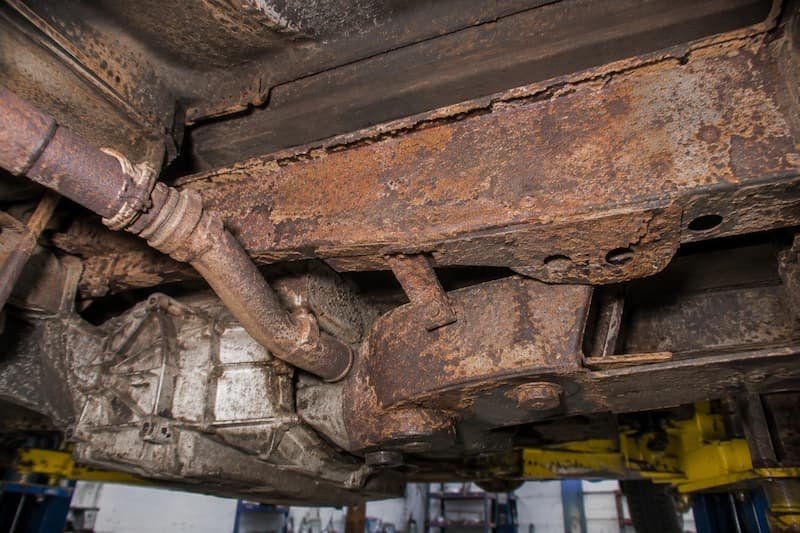
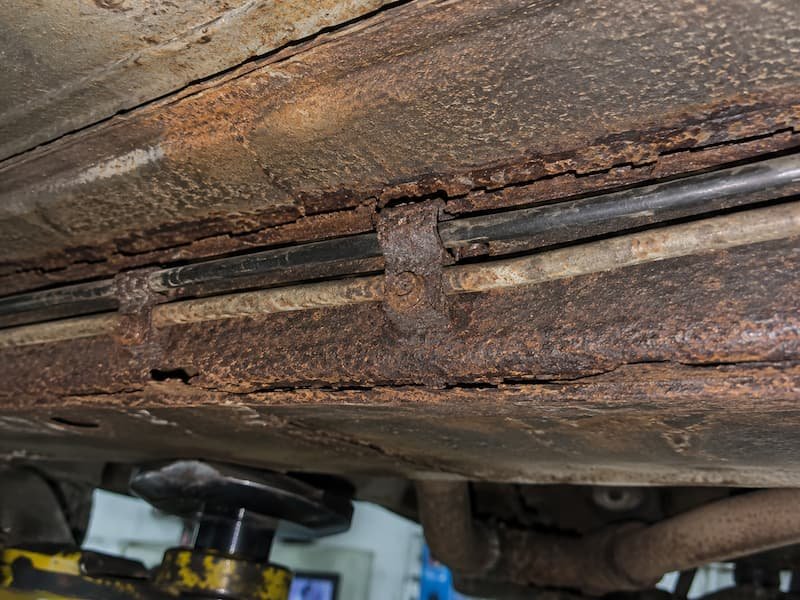
Taking the camera's route, the nearside sill to floor seam is the worst of it. Heavy scaly laminating rust runs the length of the seam with bright red active oxide bleeding out of it, the signature of corrosion still working rather than a historic patch that has stabilised. Laminating means the steel is separating into layers, and layers hold water.
Body mount and surrounding panel
A little inboard, a body mount and the panel around it are scaled and flaking. Body mounts carry load into the structure, so scale there gets recorded rather than waved off.
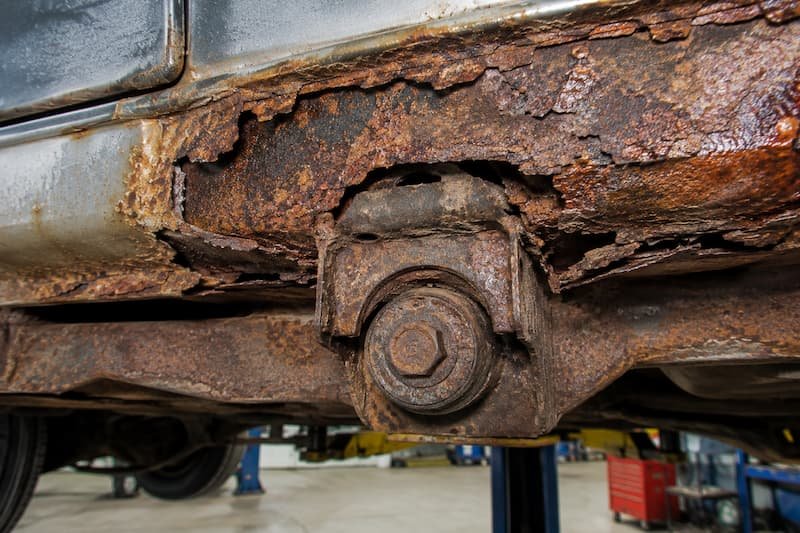
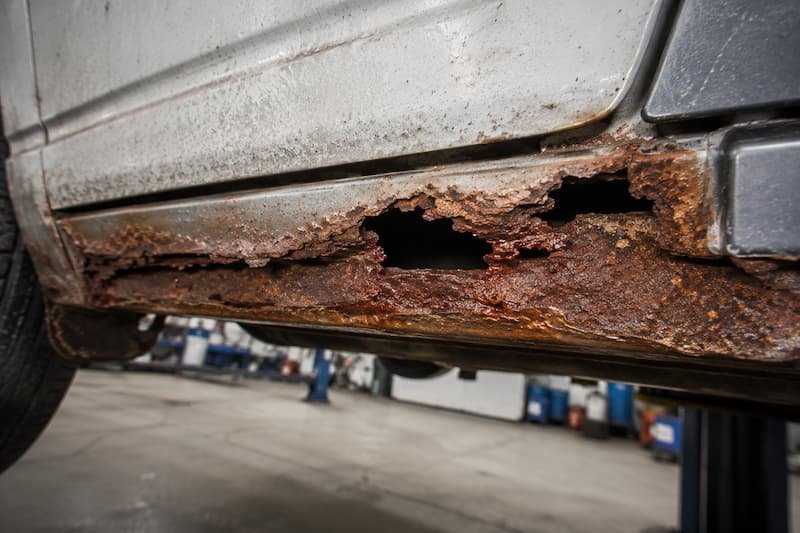
Sill lower edge — perforation
Further along the lower edge of the sill sits a patch of deep red corrosion with at least one perforation punched clean through the metal. That moves the conversation from monitoring to repair, because a hole is not a surface condition and no coating fixes it.
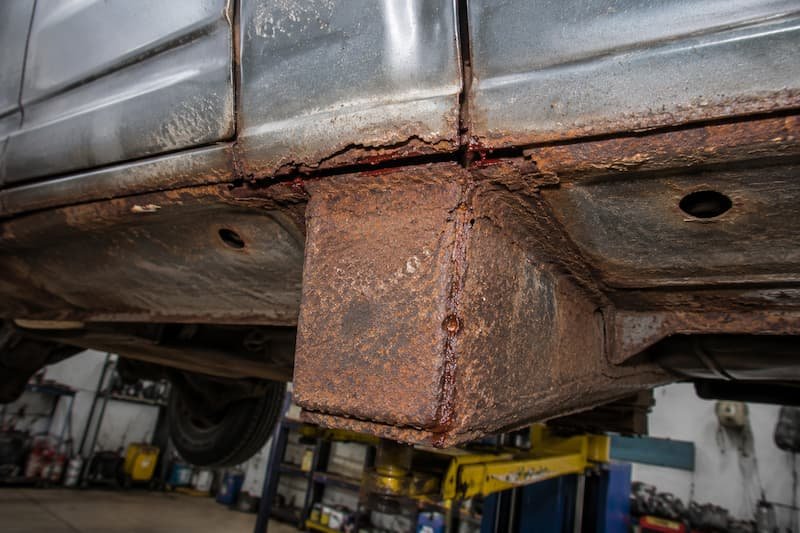
Outrigger to sill junction — the governing finding
Then the finding that governs the whole job. At the outrigger to sill junction, active red corrosion sits in the corner joint and the seam is opening up along its length, factory drain holes visible either side. The outrigger is a load path. A separated seam in a load path is structural, full stop.
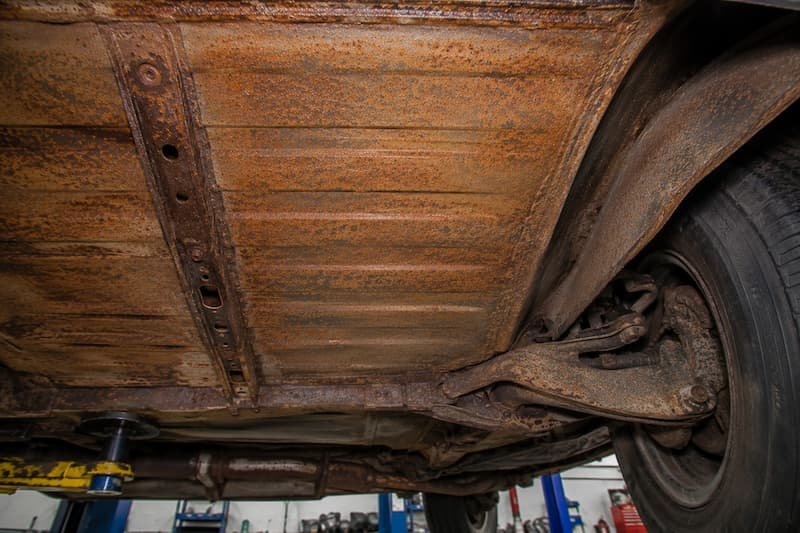
Floor pan and inner arch
The floor pan and inner arch read differently. Wide area surface corrosion, no perforation, the sort of thing that gets cleaned, treated and protected rather than cut. The front lower suspension arm and its bush were filmed too, because they sit inside the 30cm zone around the sill damage.
Rear chassis rail
At the rear, the chassis rail above the gearbox and engine is scaled and rusting, with the exhaust downpipe and rear crossmember in shot. Scaled, not holed. Different answer again.
Why did the brake and fuel lines running through that seam change the priority.
Because the worst corroded stretch of that sill has the brake and fuel lines clipped directly to it. Rotten steel is a repair. Rotten steel carrying the hydraulic circuit and the fuel feed is a safety problem with a shorter fuse.
Road salt does something specific to a clipped line. The P-clip holds the pipe hard against the panel, salt water wicks into the gap and sits there, and two dissimilar metals in contact set up galvanic corrosion that eats the pipe from outside at the one point nobody can see. The clip fitted to stop chafing becomes the trap that kills it.
A brake pipe rarely weeps for a week to warn you. It holds, then it splits under a hard stop. Pedal goes long, one circuit gone, and the van stops in roughly twice the distance you asked for.
So the order of work changes. The lines come off before any heat goes near that section, get inspected along their length, and get replaced where the condition warrants rather than refitted to a freshly welded panel. Welding around live fuel lines is not something we do. A failure sheet listing both corrosion and pipe condition gets handled together as MOT repairs carried out in the same building, because splitting that across two premises is how items get missed.
What can be welded, and what cannot.
Most of it can, and this van is repairable. The rule first, then the judgement.
The MOT treats corrosion inside a prescribed area, or within 30cm of one, as structural. Prescribed areas are the mounting points for the suspension, the steering, the braking system and the seat belt anchorages, plus the load bearing structure connecting them. Corrosion there is excessive once the metal deforms under hand pressure or a blunt instrument, and the repair has to be a continuous seam weld of new metal, not a patch fixed with rivets, filler or adhesive.
Now the judgement.
Plating over rot is not a repair, and a garage offering it should be avoided. Welding a plate on top of corroded steel traps the corrosion underneath with a fresh moisture path around the weld, and it comes back inside a couple of years worse than it left. Filler over a structural seam is worse again. It passes a glance and fails a tap.
There is an honest limit too. A vehicle stops being worth saving when sound metal has retreated so far that you are fabricating a new floor, both sills, both outriggers and the mounting points as one job. That is building a bodyshell, not repairing one. Some owners want it done anyway on a vehicle they care about, which is a fair choice made with open eyes. What is not fair is a garage cutting without telling the owner which side of the line they are on.
How is the repair specified once the rot is opened up.
Nobody can tell you the full extent of a corrosion repair before the grinder goes in, and a garage giving you a fixed all in figure over the phone is guessing. What is visible is the outside of the problem. What matters is where sound metal starts, and that is only known once the rotten steel is cut away.
So the work gets staged. First comes the inspection and the written findings with the photographs. Then the agreed cut: a defined area, an agreed set of sections to open up, and a clear point at which we stop and come back. Nothing gets cut beyond that without a phone call.
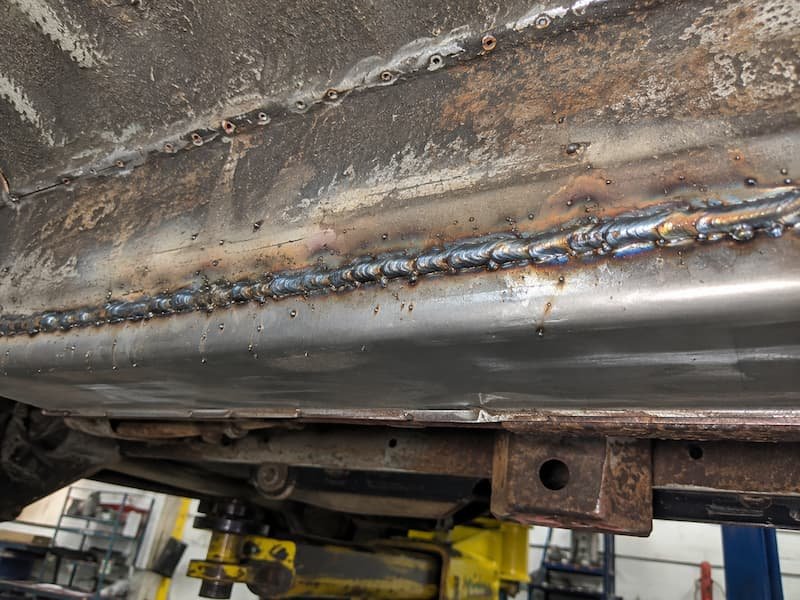
Third stage is the specification proper. Cut back to sound metal, fabricate the replacement section in matching gauge steel, butt weld it in with MIG rather than lapping a plate over the old panel, dress the welds, then seam seal, prime and coat, and inject cavity wax so the inside face is protected too. Drain holes get cleared and left clear.
Inspection and written findings
Photographs, documented findings, initial scope agreed.
Agreed cut
Defined sections opened up. Nothing cut beyond scope without a phone call.
Fabrication and weld
New gauge steel butt welded in, dressed, seam sealed, primed, coated, cavity waxed, drain holes cleared.
Worse than it looked is a normal outcome, not a scandal. The response is a photograph, a call and a revised scope before work continues, and an owner who wants to stop there can stop.
Where the vehicle needs an MOT afterwards, the retest is arranged and managed for the owner as part of the job, once the structural work is signed off.
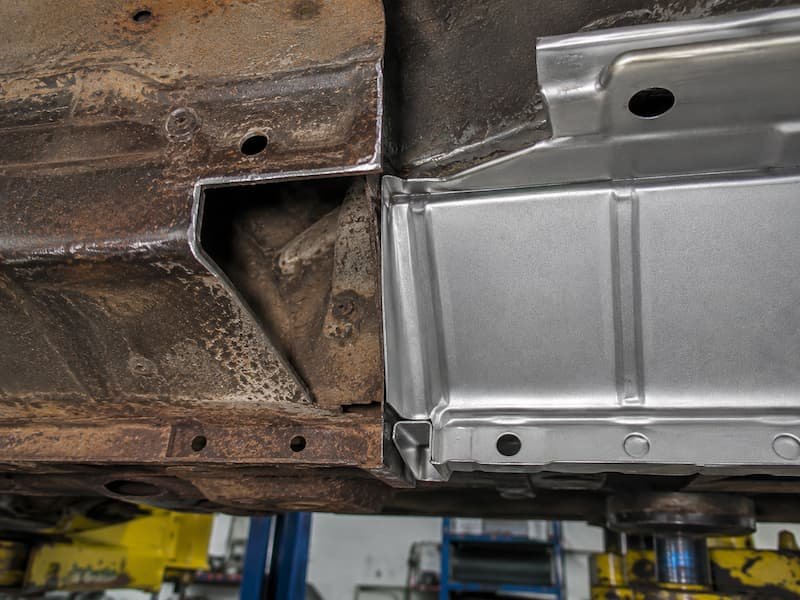
A camper owner brought a van in ahead of a booked trip having had it serviced elsewhere, confident about it, because everything mechanical on it was sweet. Brakes fine, steering fine, lights fine, engine pulling well. It failed on a sill, and the owner could not understand how a van that drove that well could be off the road over a strip of steel he had never looked at. The inspection put the whole thing on a ramp and showed him the outer face and the inner face together, which is usually the moment the penny drops. The repair went in stages. A defined section of sill was opened up first, the sound metal was found further forward than expected, a replacement section was fabricated to suit and butt welded in, then the enclosed cavity was waxed and the outer face sealed and painted to match. He was called once during the cut with a photograph, agreed the extra, and the rest of the van was left alone because the rest of the van did not need touching.
Why does a van like this go to an independent with a welding bay rather than a bodyshop.
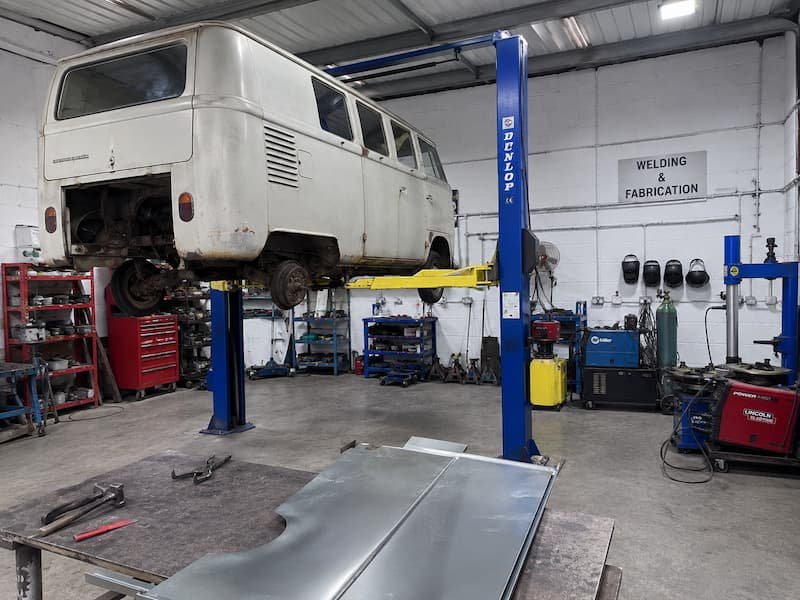
Structural welding and panel work are two different trades that happen to share a building here. A bodyshop is set up around accident damage and finish: alignment jigs, panel replacement, filler, preparation, colour matching, a booth. It is judged on how it looks when the light hits it. A welding bay is set up around load paths and fabrication: the lift, the cutting gear, the MIG plant, sheet steel, and someone thinking about where the strength goes.
- General garage subcontracts — transport, a queue, a second party reading somebody else's notes
- Bodyshop without structural experience is under pressure to make it look finished
- Filler and paint over a separated seam is the predictable result
- Inspection, cut, fabrication and weld in sequence with the same people
- Panel and paint work in our own spray booth follows the structural repair
- The van never moves between premises with a half open sill
Rust jobs need both, in that order, and the order is where trouble starts. Under one roof, the inspection, the cut, the fabrication, the weld and then panel and paint work in our own spray booth happen in sequence with the same people, and the van never moves between premises with a half open sill.
What happens to a van that gets another year of underseal instead.
It gets worse, faster, and it costs more scope the following year. Corrosion does not pause because you covered it up.
Spraying underseal over active rust is close to the worst thing you can do to a vehicle in this condition. The coating skins over the scale, moisture already inside the laminated steel stays there, and the new layer stops it drying out and stops anybody seeing underneath. Twelve months on, the panel looks black and healthy and the metal behind it has gone.
- A separated outrigger seam spreads along the joint in both directions
- One perforation in a sill lower edge becomes a run of them
- Surface scale on a floor pan that would have cleaned up turns into pitting, then thin metal, then a hole above the exhaust
- The sound metal you needed to weld to is the thing you are losing
That is how a repairable van becomes an unrepairable one, in two or three years rather than ten. It does something to the value as well. A T25 with documented structural repair and photographs of the welds sells. A T25 with fresh underseal and no history is one every buyer assumes is hiding something, and on this shape they are usually right.