Book Online
07400454839
-
By: Ali Hindal
- 0 Comments
Your motorhome is a class 4 or a class 7 MOT depending on one number, and that number is the design gross weight recorded on the V5C. Up to 3,000kg it is class 4. Over 3,000kg and up to 3,500kg it is class 7, and once the design gross weight passes 3,500kg the vehicle leaves the MOT classes altogether and goes for an annual goods vehicle test instead.
The badge on the back panel, the length of the shell, the number of berths and the base van underneath tell you nothing dependable. Two motorhomes that look identical on a Rumney driveway can sit either side of the line. This guide covers which figures to read on the logbook, why the line falls at 3,000kg, the statutory fee caps, what goes wrong when the wrong class is booked, and why so many Cardiff garages quietly turn motorhomes away at the phone stage.
Class 4 or class 7, at a glance
- The design gross weight on your V5C decides the class, not the model name, the base van or the length.
- At or under 3,000kg the motorhome takes a class 4 MOT. Over 3,000kg it takes class 7.
- Design gross weight is not kerbweight, and it is not the plated weight a downplate gives you.
- Class 7 carries a higher statutory fee cap than class 4.
- Not every station can physically test a motorhome. Height, length, axle limits and brake roller capacity all rule test lanes out.
- The MOT covers the base vehicle only. Nothing in the habitation area is tested.
KEY TAKEAWAYS

● Design gross weight decides the class, not the model, not the size and not the kerbweight.
● Class 4 covers motor caravans up to 3,000kg design gross weight. Class 7 covers goods vehicles over 3,000kg and up to 3,500kg.
● The statutory DVSA maximum fee is 54.85 pounds for class 4 and 58.60 pounds for class 7. Those are legal caps, not our prices, and VAT is not payable on the test fee.
● Above 3,500kg design gross weight there is no MOT class. The vehicle takes an annual goods vehicle test and carries a plating certificate.
● Read the weight figures printed in the technical details on your V5C and bring the document with you. Box lettering has changed between versions of the certificate, so go by the printed wording.
● Most garages that refuse motorhomes are refusing on physical grounds: bay height, ramp length, axle limits on the lift and brake roller capacity.
● Downplating changes your licence position and your taxation weight. It does not move a vehicle out of class 7
What decides whether a motorhome is class 4 or class 7?
The design gross weight decides it. That is the weight the vehicle was built to reach fully loaded, and DVSA sets the class against it. Class 4 covers motor caravans up to 3,000kg design gross weight, alongside cars and other light vehicles. Class 7 covers goods vehicles over 3,000kg and up to 3,500kg, and a motor caravan above the line falls into that bracket.
Nothing else moves the answer. Not the length of the body. Not whether it is a panel van conversion, a coachbuilt with an overcab bed or a low profile. Not the berths, not the age, not the fit-out, not what it weighs on the day you drive it in.
DVSA uses the term motor caravan for the body type, and it appears on the V5C. It tells you what the vehicle is, not which class it tests in.
Two figures on the logbook matter: the design gross weight and the revenue weight. Where they disagree, and they often do on a converted or replated vehicle, the station needs both before it accepts the booking.
Where do I find the weight that decides it on my V5C?
Send us the weight and we will confirm the class
Read the design gross weight off your V5C, send it to CF3 MOT and Service Centre with the registration, and we will tell you whether the vehicle books in as class 4 or class 7 before you pay for anything.
Look in the technical details block of the V5C, the part listing mass figures rather than make, model and colour. Two labels matter. One is the maximum permissible mass, also written as design gross weight or maximum authorised mass. The other is the revenue weight, which is what DVLA holds for taxation.
Go by the printed wording rather than the box letter. The mass figures generally sit against the F group, but lettering has changed between versions of the V5C, and quoting a letter off an older certificate at a booking clerk causes more confusion than it solves. Read the numbers, note which label sits beside each, and bring the document with you.
Then check the plate. Most motorhomes carry two: the manufacturer’s VIN plate, usually inside a door aperture or under the bonnet, and a converter plate fitted by the company that built the habitation body. The converter plate reflects how the vehicle left the conversion line, and it is the one that most often disagrees with a stale V5C. Resolve that before the test, not on the day.
No V5C at all, because it went missing in a sale or a house move? Apply to DVLA for a replacement before you book. A garage cannot guess a weight.
What is design gross weight, and how does it differ from kerbweight?
Design gross weight is the maximum the vehicle is designed to weigh with everything in it: fuel, water, gas, awning, bikes, passengers and the contents of every locker. You will also see it called maximum authorised mass, and on the V5C it usually reads as maximum permissible mass. It is a design limit, not a measurement of your vehicle today.
Kerbweight is the other end of the same scale: the vehicle ready to drive with fluids and fuel, nothing loaded and nobody aboard. Converters publish variations under names like mass in running order, and the definitions differ enough that comparing brochures rarely tells you much.
The gap between the two is your payload. It decides whether you can carry a scooter rack and a full water tank at once, and it is often far smaller than owners assume.
Revenue weight is a third figure, sitting on the V5C for taxation, and plating can change it without touching what the vehicle was designed to do.
For the class, only the design figure counts. A weighbridge visit is still worth doing, because an overloaded rear axle is a common fault on a heavily specified coachbuilt, but the ticket has no bearing on which class you book. Your loaded weight is a road safety question. Your design weight is a test class question.
What is the MOT fee cap for each class?
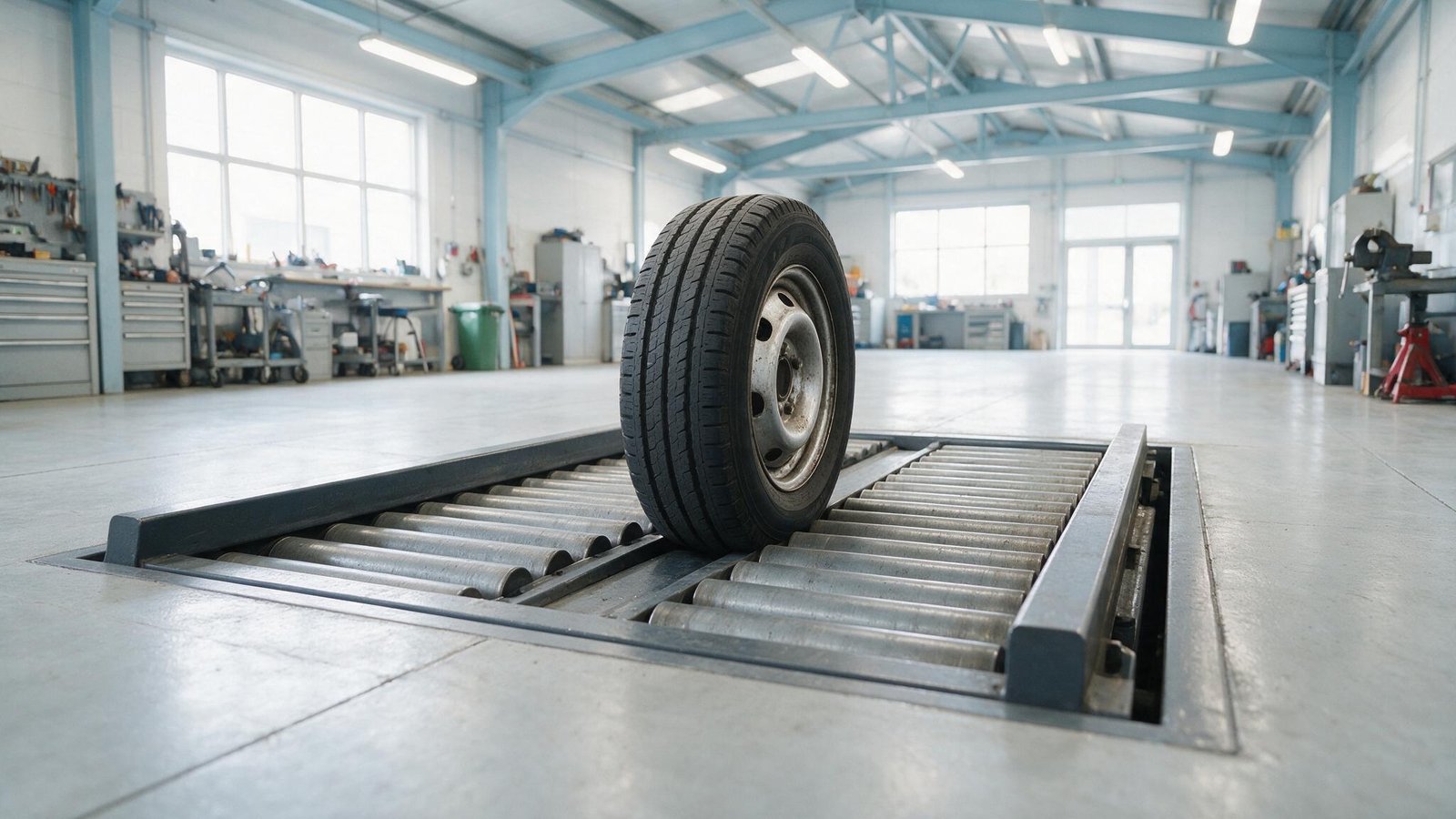
Both classes have a legal maximum fee set by DVSA. For class 4, covering motor caravans up to 3,000kg design gross weight, the statutory maximum is 54.85 pounds. For class 7, covering goods vehicles over 3,000kg and up to 3,500kg, it is 58.60 pounds.
Read those as ceilings written into legislation, not as our prices and not as anybody’s price. They are the most a station may lawfully charge for the test itself, they have been frozen since 2010, and VAT is not payable on the fee. Plenty of garages, including ours, charge below the cap.
The cap stops at the test itself. Repairs, parts, any retest arrangement and any habitation work sit outside the statutory fee and should be quoted separately and itemised before the spanners come out.
Ask any garage to split a quote into test, labour and parts, and to say which items are advisories rather than failures. A single unexplained total is worth questioning, because motorhome work varies with access and with what the converter buried behind the furniture.
Why is the line at 3,000kg and not at 3,500kg?
Because class 4 and class 7 divide the light vehicle range in two, and the split falls at 3,000kg design gross weight. Class 4 is the broad one: cars with up to eight passenger seats, motor caravans, and goods vehicles up to 3,000kg. Class 7 picks up the rest and runs to 3,500kg, the top of the light range.
A separate class exists because heavier vehicles are tested to different values. Brake performance is assessed against the design gross weight, so a vehicle designed at 3,500kg must produce more braking effort than the same shell designed at 2,900kg. The rollers have to be rated for the axle loads involved. Slot times run longer. Stations are authorised class by class, and class 4 approval does not carry class 7 with it.
The 3,500kg figure at the top of class 7 matters for a second reason: it is the same line separating a standard category B car licence from C1 entitlement. Zero emission goods vehicles carry a concession letting category B holders drive them up to 4,250kg, but that governs what you may drive, not which class the vehicle tests in.
Does the model name or the base van tell me the class?
No. A model name is a label attached to a floorplan, and the same floorplan is routinely built on more than one chassis. Ask a converter what a given model weighs and the honest answer starts with a question about which chassis was ordered.
Take the two base vans that carry most of the European market, the Fiat Ducato and the Peugeot Boxer. Both are offered to converters at several plated weights, from the lighter end of the range up through the heavy duty chassis that sits above 3,500kg altogether. Auto-Trail, Swift and Bailey all build across those options, so two vehicles of the same model, year and length can leave the factory plated differently because the first buyer specified a payload upgrade, an Al-Ko chassis or a heavier rear axle.
Then there are the changes made afterwards. A vehicle uprated by a specialist carries a revised plate. One downplated for licence reasons carries another. Neither shows up in the model name, or in a forum thread about it.
The converter plate and the V5C are the record. Everything else is a guess, and a guess costs you a morning.
| WORKED EXAMPLE An owner of a six berth coachbuilt rang to book a class 4 test because a neighbour with what looked like the same van, same model year, same length, had been through a class 4 the previous spring. We asked for the design gross weight off the logbook. It came back at just over 3,000kg, because the vehicle had been ordered with a payload upgrade for a scooter rack that the neighbour’s had not. Same badge, same shell, different class. The booking was switched to class 7 before it was made, the slot was set aside with the right roller capacity, and the vehicle went through on the date the owner originally wanted. Had the class 4 booking gone ahead, the vehicle would have arrived to a bay that could not lawfully test it. |
What happens if I book the wrong class?
You lose the appointment, and usually the morning with it. A station cannot reclassify a vehicle at the door, because its authorisation, the equipment the test needs and the length of the booked slot are all set in advance. Three things get in the way:
● Authorisation. Many stations hold class 4 approval only, so a class 7 motorhome cannot be tested there regardless of goodwill or an empty bay.
● Equipment. Brake rollers have to be rated for the axle loads presented, and a roller set specified for cars will not take a 3,500kg rear axle.
● Time. Class 7 slots run longer, and dropping one into a class 4 slot pushes every booking behind it.
The test fee attaches to the slot held for you, and a slot held and not used is one nobody else could book. That is the real cost, particularly in March and April, when motorhome bookings across Cardiff are tightest.
Avoiding it takes one step. Read the design gross weight before you ring, say the number during the call, and let the garage set the class from the figure.
What if the design gross weight is over 3,500kg?
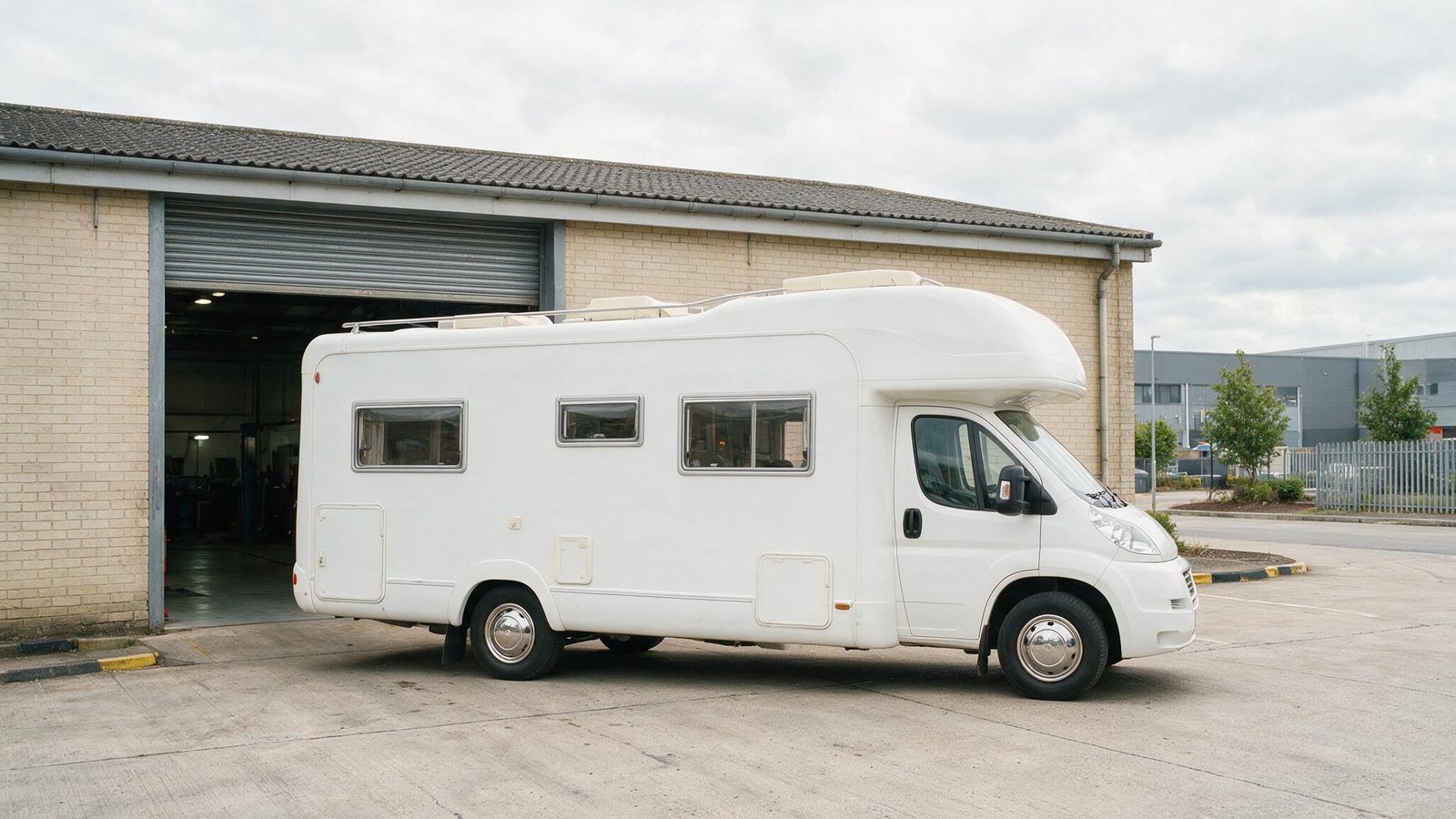
Then it is not an MOT at all. Vehicles above 3,500kg design gross weight fall outside the MOT classes and take the annual goods vehicle test instead, at a DVSA authorised testing facility rather than a standard MOT station. Owners of large American motorhomes, heavy A-class vehicles and anything on a 7,500kg chassis sit in this group, and plenty do not realise until the first renewal.
Three things change:
● The test is the goods vehicle annual test, run to a different inspection standard from the MOT.
● The vehicle is plated, so you hold a plating certificate showing permitted axle and gross weights rather than an MOT certificate.
● The cycle is annual, and the first test falls due at a different point from a car’s three year mark, so check the date with DVSA rather than assuming.
Private use keeps you clear of operator licensing and tachograph duties, the question most owners ask next. Preparation is much the same as for any motorhome, so brakes, suspension, corrosion and lighting still decide the outcome, and we do that work for vehicles tested elsewhere too.
Why can some garages not physically test my motorhome?
Book a lane that can actually take your motorhome
We test class 4 and class 7 at our six bay workshop on Wentloog Road in Rumney, with the height, the length and the axle capacity to take a coachbuilt. No wasted trip to a station that cannot get you through the door.
Because the vehicle does not fit, or the equipment is not rated for it, and neither is solved by being helpful. That is the honest reason behind most of the polite refusals motorhome owners collect over the phone.
The physical envelope
Height comes first. A high top van conversion sits around three metres before you add anything, and roof gear stacks on top: solar panels, a satellite dome, an air conditioning pod, an aerial, roof bars. Door apertures and roof beams do not move, and a vehicle that clears the door still has to go up on a lift.
Length and overhang come next. A seven metre coachbuilt on a four post lift can hang a metre of rear overhang off the end of the ramps, and a long front overhang grounds on the approach ramp before the wheels reach the platform. Towbars, bike racks and awnings all add to the footprint.
The equipment limits
Lifts and rollers carry ratings per axle, not just a total. A rear axle loaded to the top of a 3,500kg plate can exceed the axle limit on a lift that takes the total weight comfortably. Roller brake testers have the same constraint, and where a vehicle cannot be roller tested the alternative is a decelerometer test on a road run, which not every station is set up for.
DVSA is tightening the standard as well. From 1 April 2026, new or modified bays need jacking equipment rated to 2 tonnes with 1700mm lifting pads.
Our position is straightforward. We run a 10,000 sq ft workshop with six bays in Rumney, we work on motorhomes and light commercials regularly, and we manage the test arrangement for you rather than sending you to find a station. Where the vehicle needs work before or after, our motorhome servicing and repair work at our Rumney workshop keeps brakes, welding, bodywork and diagnostics in one building instead of three appointments.
| WORKED EXAMPLE A van conversion owner from St Mellons had been turned away twice, once at the door after driving across the city. The vehicle measured 3.1 metres to the top of the solar panels and just under six metres nose to towball. On the third attempt the owner rang first and gave three numbers before anything else: design gross weight, height with the roof gear, length including the towbar. That call took two minutes and settled what the previous two trips had not. The vehicle came in on a booked slot, went through the test, and the corroded rear brake pipe that showed up was replaced the same week rather than becoming another journey. The pattern repeats constantly. Owners are refused on measurements nobody asked them for at the booking stage. |
Does downplating change the class, and is it worth doing?
Downplating changes your licence position and your taxation weight. It does not change the MOT class, and anybody telling you otherwise is mixing up two different figures.
Downplating means having the permitted maximum weight formally reduced, usually by a specialist who issues a revised plating certificate, with the new revenue weight recorded with DVLA on the V5C. The reason is nearly always the licence. Drivers who passed after January 1997 hold category B entitlement, which stops at 3,500kg, and anything plated above needs C1. Bringing a 3,850kg vehicle to 3,500kg puts it back within reach of a car licence.
That is a real benefit and a legitimate reason to do it. The test class is a different matter, because the class follows what the vehicle was designed to carry, so a van designed at 3,500kg stays class 7 after its revenue weight is reduced on paper.
Our view: downplate for the licence, never for the test, and never without thinking about payload. You give away carrying capacity permanently, and an owner who downplates a heavily equipped coachbuilt can end up legally overloaded on the first family trip. Get it weighed loaded before you commit.
How do I book once I know the class?
Have five things in front of you and the booking takes one call, instead of three.
● The design gross weight from the V5C, plus the revenue weight where the two differ.
● Overall height including solar panels, aerials, air conditioning and roof bars. Measure it rather than quoting the brochure.
● Overall length including towball and bike rack, and the width across the mirrors.
● The axle layout, so a twin or heavy rear axle is known in advance.
● The current MOT expiry date and the service history, including the last habitation service.
Book early. Demand across Cardiff concentrates into late winter and early spring, and the vehicles that have sat since October are the ones needing brake and corrosion work. Testing up to a month minus a day before the current certificate expires keeps your renewal date, so going early costs you nothing. Owners who come to us in January and February get the slot they want.
Worth separating in your head: the MOT covers the base vehicle, so brakes, steering, suspension, structure, lighting and tyres. It does not cover the habitation side. Gas, damp, electrics behind the furniture and appliance safety belong to a habitation service, and a pass certificate says nothing about them. A pre-MOT check ahead of the test date catches base vehicle faults early, which matters more on a vehicle that has been standing than on a car driven daily.
The same preparation sits behind how we handle MOT bookings for cars and light commercials across Rumney, Llanrumney and St Mellons. Spring motorhomes fail on what the vans fail on: corroded brake pipes, tired bushes, a lighting fault nobody saw in the dark.
| NEXT STEP Get the class settled before you drive anywhere. Ring 07400 454839 with the design gross weight, the height and the length, or start with our motorhome MOT service at CF3 in Rumney, which confirms the right class and the right slot so the vehicle is tested first time instead of turned around at the door. We are on Wentloog Road in Rumney, five minutes from the Newport Road corridor, and we collect across Cardiff where you would rather not drive it yourself. |
Motorhome MOT questions
Is a 3,500kg motorhome class 4 or class 7?
Class 7, because its design gross weight is above 3,000kg and at or below 3,500kg, which is exactly the range class 7 covers. Class 4 stops at 3,000kg for motor caravans. The model name and the length make no difference to that answer.
Which figure on the V5C decides the MOT class?
The design gross weight, also printed as the maximum permissible mass, in the technical details section of the certificate. The revenue weight sits nearby and is used for taxation. Read both, note which label goes with which number, and bring the V5C to the appointment rather than relying on a remembered box letter.
Does a motorhome need an MOT at three years old?
Yes, the first test is due at three years for vehicles in the MOT classes, and the 2026 review confirmed that the three year point stays rather than moving to four. Motorhomes with a design gross weight above 3,500kg sit outside the MOT classes and follow the annual goods vehicle test cycle instead.
Does the MOT cover the habitation area?
No, the MOT tests the base vehicle only, so brakes, steering, suspension, tyres, lighting, structure and emissions. Gas systems, damp, 12 volt and mains electrics and appliances are checked in a habitation service, which is a separate piece of work with its own report.
How far ahead should I book a motorhome MOT in Cardiff?
Several weeks ahead for a spring test, and earlier than that for March and April, which are the busiest weeks of the motorhome year. Testing up to a month minus a day before your current certificate expires keeps the same renewal date, so booking early costs you nothing in certificate time.
Book the right MOT class first time
Send CF3 MOT and Service Centre your registration and the design gross weight from your V5C and we will confirm the class before you book. We are on Wentloog Road in Rumney, we test class 4 and class 7, and we have the height and length to take a motorhome.
