
Book Online
07400454839
-
By: Ali Hindal
- 0 Comments
A car battery can be delivered and fitted where the vehicle is standing, which is the point of the service when the engine will not turn. The job starts with a test, not with a battery. A car that will not start does not always need one, and the test tells you which.
Cold mornings in Cardiff produce a predictable run of no start calls, and October is the month weak batteries get found out.
What follows is written for the moment you are standing beside your car with the key in your hand. The five patterns below tell a flat battery from a failed battery, a charging fault, a starter fault and an immobiliser fault.
Flat batteries and battery fitting in Cardiff, at a glance
- Cold weather raises the current your engine needs to crank and cuts what the battery can supply, so October exposes batteries that were already weak.
- The UK average for a car battery replacement booked through FixMyCar is £217.37, covering electrics testing and diagnostic, battery removal, battery sourcing and battery fitting.
- The UK average for mobile car battery replacement on the same platform is £196.52.
- Make averages on the same data run from £177.29 for Toyota up to £271.91 for BMW.
- Resting voltage measures state of charge only, so your battery can read correctly and still collapse under cranking load.
- A car that starts on a jump start has not been diagnosed, because an alternator fault flattens a brand new battery within days.
- Start stop cars need an EFB or AGM battery, and many modern cars need the new battery registered to the charging system.
Why do car batteries fail in cold weather
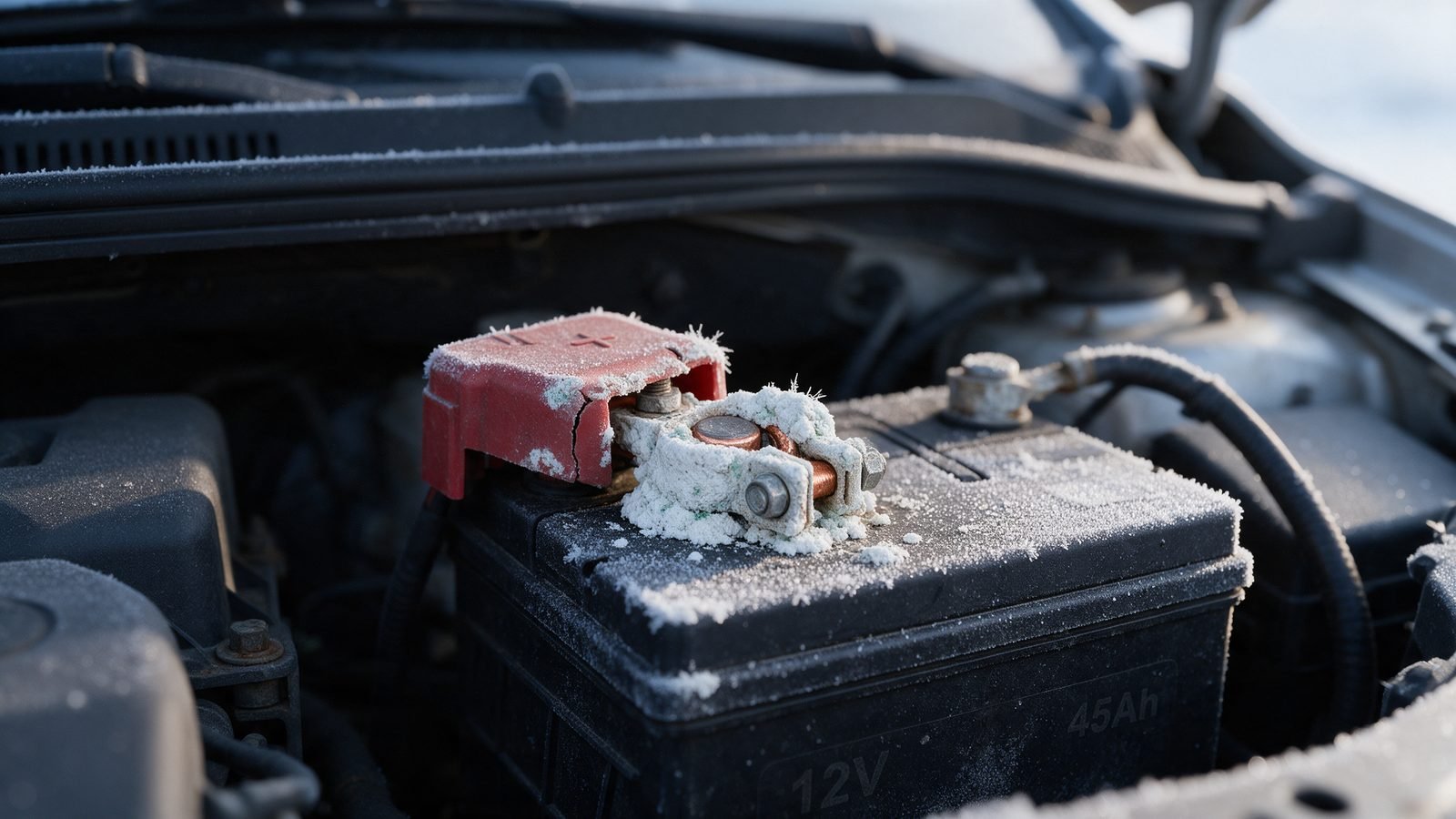
Car batteries fail in cold weather because low temperatures work against the battery from both directions at once. Cold engine oil is thicker, so the starter draws more current to turn the engine. The chemical reaction inside the battery also slows, so it supplies less current than on a mild day.
A battery in good condition has the reserve to absorb both effects. A worn battery does not. The fault was already there in September, and the first cold morning is the moment your margin runs out.
Short journeys make it worse. Starting an engine takes a large charge out, and the alternator needs sustained running time to put it back. A fortnight of five minute trips with your headlights, heated rear screen and blower all drawing leaves the battery ending each journey with less charge than it began with. Cold weather explains why your battery gave up this week, not whether it is the only fault.
How do you know it is the battery and not something else
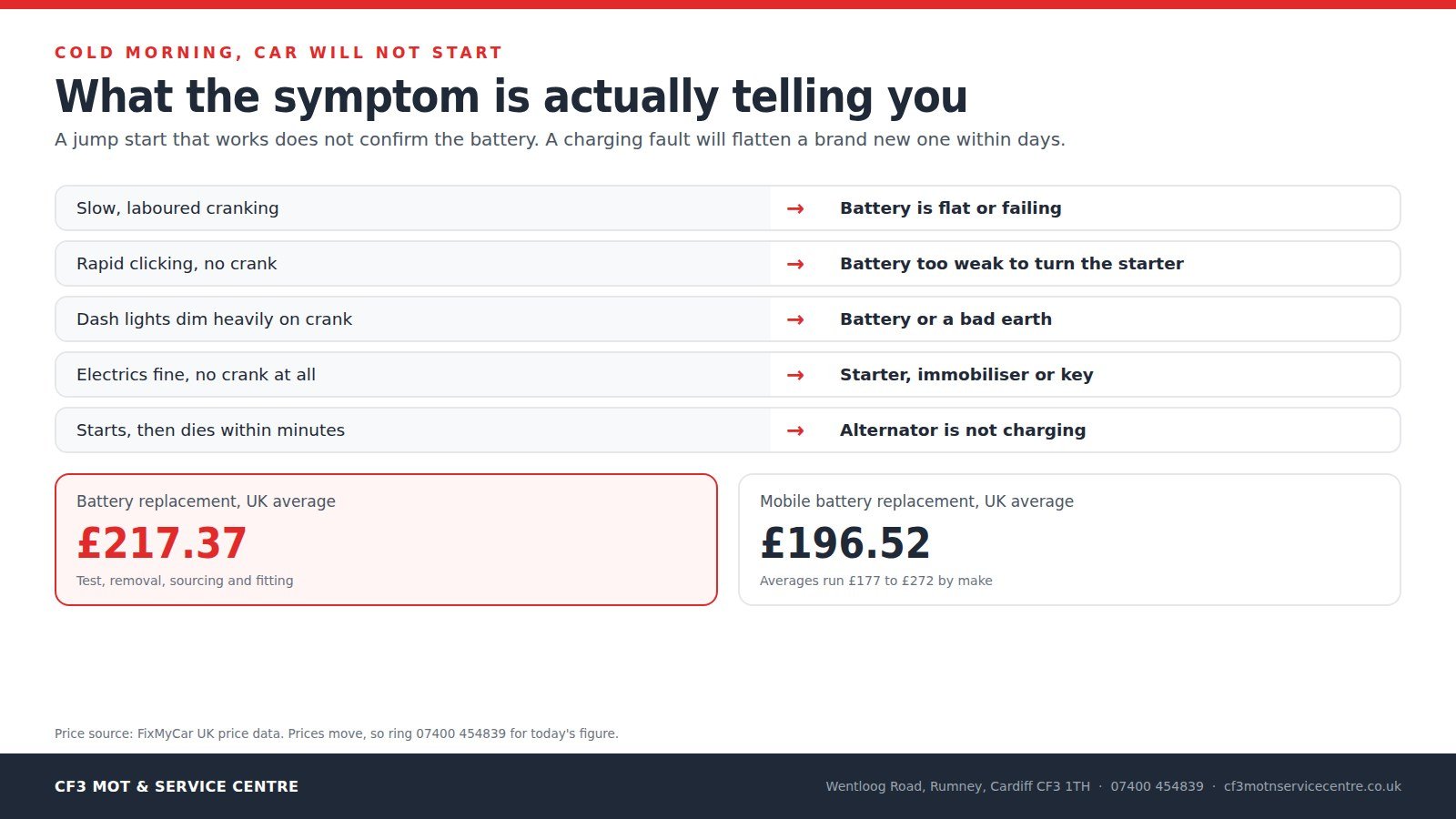
The battery is the likely fault when the symptoms show a shortage of current rather than a shortage of control. Everything your starter needs passes through the battery, so a weak battery gives you slow, laboured cranking and dashboard lights that dim sharply when you turn the key. Five patterns cover almost all no start cases.
A flat but healthy battery. Cranking is slow and laboured, and slower with each attempt you make. Your dashboard and interior lights dim heavily on crank, and the central locking is sluggish.
A failed battery. Cranking is absent rather than slow. You hear rapid clicking from the starter solenoid, because voltage collapses, the solenoid drops out, voltage recovers, and the cycle repeats several times a second. A swollen case or a weeping terminal is a battery to stop using.
A charging fault. The battery warning lamp comes on while you drive, or your headlights dim and brighten with engine speed. Your car starts on a jump start, then dies when the leads come off or a few miles later.
A starter fault. Your lights stay bright. The radio plays, your dashboard looks normal, and the engine either does not move or gives one heavy clunk. Bright lights matter here, because a starter that is not drawing current cannot pull the voltage down.
An immobiliser or key fault. Every electrical item works normally and the starter does nothing, with no click and no attempt to turn. A key, immobiliser or padlock symbol stays lit, and a spare key that behaves differently is a strong clue for you.
Two further symptoms are regularly misread. A car that starts and then dies within seconds is rarely a battery, and belongs with fuel delivery, immobiliser or charging faults. Start stop that has quietly stopped working is the earliest warning of all.
Your car needs plugging in rather than guessing when the pattern fits none of the five cleanly, and that is what engine diagnostics establishes.
What should you do first when the car will not start
Turn everything off and listen. Switch off your headlights, heater, radio and heated screens, shut the doors, then turn the key once and watch the dashboard lights. One deliberate attempt tells a technician more than six frantic ones, and repeated cranking drains what charge you have left.
Check the simple things next. Make sure an automatic is in Park or Neutral, press the clutch fully on a manual, and try your spare key. Look at the battery terminals if the bonnet is safe to open, because a loose or corroded clamp mimics a dead battery.
Then write down what you saw. The workshop needs specifics: whether the engine turned over, whether the lights dimmed, whether there was one click or rapid clicking, and whether your car has been standing.
Want a battery tested before you buy one?
Ring CF3 MOT and Service Centre on 07400 454839 and describe what your car is doing. The test establishes whether your battery, the charging system or the starter is at fault.
Is a jump start enough
A jump start is enough to move your car and not enough to diagnose it. Jump starting puts external current into the starter circuit, so a car that fires up on leads has only proved the engine will run. Why your battery went flat remains unknown.
Three faults look identical at the point the engine catches. A healthy battery that was simply discharged takes charge from the alternator and is fine. A battery with a failed cell starts once with help and refuses again as soon as you switch off. An alternator fault flattens whatever battery is fitted, including a brand new one, within days.
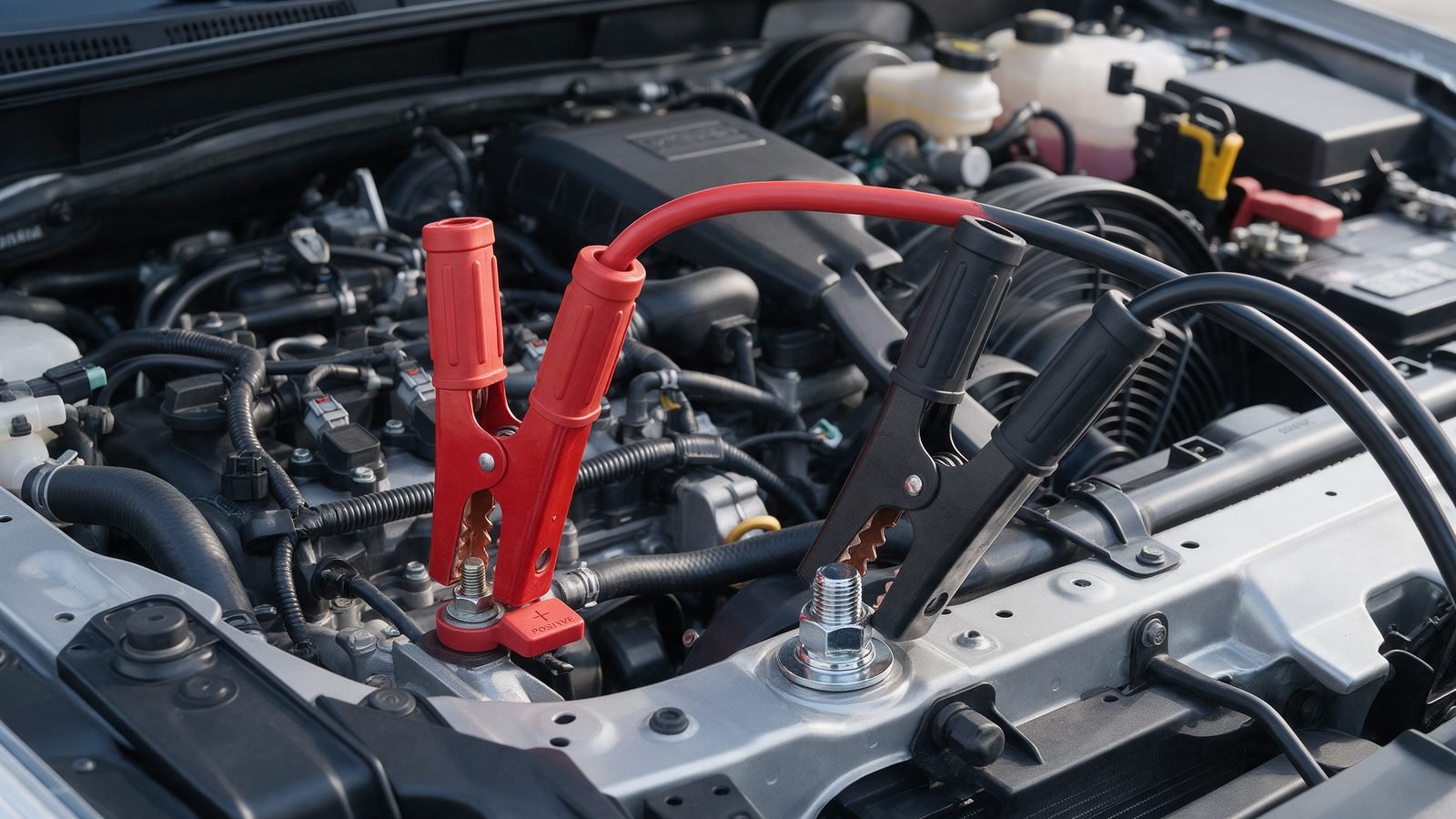
Keep any use of jump leads or a jump pack brief and cautious. Read your handbook for the designated jump points, because many modern cars have a remote positive post and a dedicated earth point rather than accessible battery terminals. Never connect leads with reversed polarity, keep them clear of moving parts and hot components, and do not lean over the battery while cranking. Modern cars carry electronic control units that are sensitive to voltage spikes, and an incorrect connection can cause damage that costs far more than a battery.
A car that will not run, or is not safe to drive once it starts, should be moved rather than nursed. Vehicle recovery in Cardiff covers the cases where the fault is not a battery at all. Once a test confirms the battery, your next question is the figure.
How much does a car battery cost in Cardiff
A car battery replacement costs £217.37 on average across the UK according to price data currently published by FixMyCar, and that average covers electrics testing and diagnostic work, removal of the old battery, sourcing the battery and fitting it. The same source puts the UK average for mobile car battery replacement at £196.52. The FixMyCar page carries no publication date, so both are current published averages rather than a dated snapshot.
Averages by make, same source:
- Toyota: £177.29
- Renault: £187.47
- Peugeot: £194.00
- Vauxhall: £197.65
- Ford: £198.79
- Volkswagen: £214.25
- Volvo: £236.86
- MINI: £254.18
- Mercedes: £266.08
- Audi: £266.47
- BMW: £271.91
The range runs from roughly £177 to roughly £272 by make, and two things drive that gap. Access is one, because some batteries sit under a seat, under the floor or behind a wheel arch liner. Battery type is the other, because a start stop car needs an EFB or AGM battery and those cost more than a standard lead acid battery.
Battery prices move with supply costs, so ring 07400 454839 for a firm price for your registration. Which of the three types your car takes moves your figure most.
What is the difference between a standard, EFB and AGM battery
A standard battery, an EFB and an AGM are three constructions built for three different duty cycles. A standard flooded lead acid battery sits near full charge, delivers one large burst of current, then is topped back up. An EFB, meaning enhanced flooded battery, is a strengthened flooded design built to be charged and discharged repeatedly without losing capacity. An AGM, meaning absorbent glass mat, holds its electrolyte in glass fibre matting and handles the heaviest cyclic duty and the highest charge acceptance.
Start stop cars need EFB or AGM for a structural reason. Your engine shuts down at every set of lights and restarts, so it starts far more often than a conventional engine. The battery also runs your lights, infotainment and climate fans while the engine is off, so it spends its life being discharged and recharged at partial state of charge.
A standard battery is not built for that duty. Fitting one to a start stop car works the plates in a way the design does not allow for, and capacity falls away early. Your car frequently responds by disabling start stop. A car specified for AGM must be given AGM, because the specification reflects a charging profile a flooded battery cannot meet.
Not sure which battery your car takes?
Ring 07400 454839 with your registration. The size, the terminal layout, the hold down type and the EFB or AGM requirement are established from your vehicle before anything is ordered, which saves a second visit.
Does a new battery need coding to the car
A new battery does need registering or coding on most modern cars, and that work is not optional on those vehicles. A car fitted with battery monitoring keeps a record of the battery installed, including its age, type and estimated capacity. The charging system uses that record to set charging voltage and alternator load.
Skip the registration and your car charges a new battery as though the old, worn one were still fitted. The charging voltage is then wrong for the battery that is actually there, which can shorten the life of the battery you just paid for. On cars that need the type coded too, telling the system an AGM is fitted when it is not produces the same mismatch in reverse.
The consequences are visible to you. Start stop stays disabled, battery or charging messages appear on your dashboard, and the new battery underperforms for no reason you can see. Registration is carried out with a diagnostic tool at the time of fitting, which is why a battery fitted away from the workshop needs proper equipment on the van. Registration is not the only reason a new battery disappoints.
Why does a new battery keep going flat
A new battery keeps going flat because something outside the battery is taking the charge out or failing to put it back. Two causes account for almost all cases: the charging system is not delivering, or your car draws current while it sits parked.
A charging fault is the first thing to rule out. A failing alternator, a slipping auxiliary belt, a faulty voltage regulator or a corroded earth strap all leave the battery discharging more on every journey than it recovers. Your car keeps starting for a while, then stops, and a replacement battery buys a few days before the same thing happens again.
Parasitic drain is the other cause, and it is the usual answer when your battery goes flat after standing. A hardwired dashcam, an aftermarket alarm or tracker, a faulty boot switch holding a light on, or a control module that never sleeps will all pull current around the clock. Measuring it properly means waiting for the modules to shut down, reading the quiescent current, then isolating circuits until the draw disappears, which is time in the bay rather than at your kerbside.
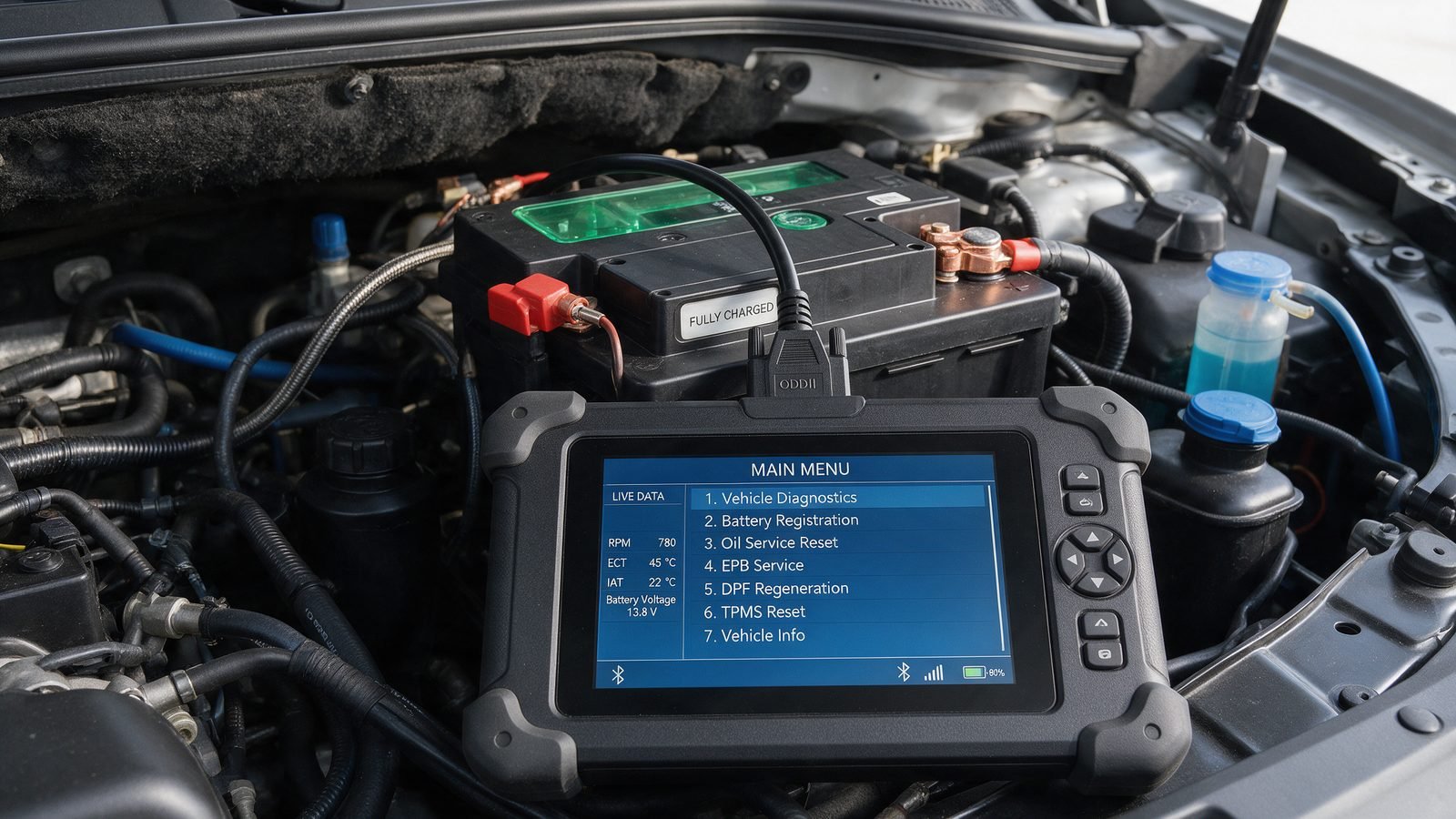
Voltmeter readings mislead people here, because resting voltage reports state of charge and says nothing about capacity. Your battery can show 12.6 volts, the resting open circuit reading of a fully charged conventional lead acid battery, and still drop far below what the starter needs the instant it is asked for several hundred amps. That reading is a state of charge figure rather than a pass or fail threshold, so a proper test measures cranking performance under load and charging output with the engine running. Which is why a proper visit starts with test equipment, not a battery in a box.
What happens during a battery delivery and fitting
A battery delivery and fitting means the technician, the test equipment and the battery come to your car, rather than the car being driven or towed in. The visit begins with testing: the battery under load, the starter draw, then the charging output once the engine runs, because fitting a battery to a car with an alternator fault solves nothing.
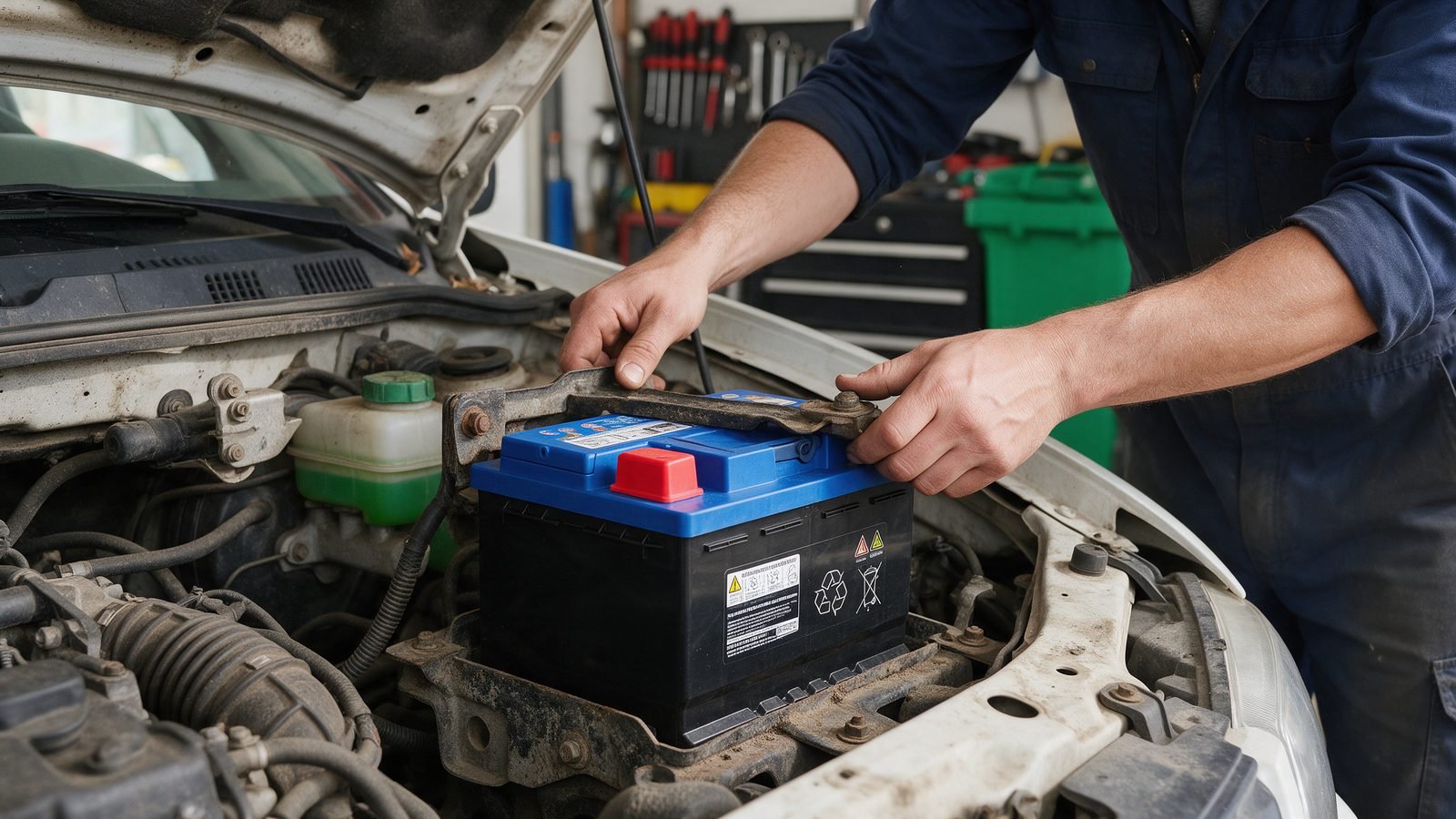
The correct unit goes in once the test confirms the battery. Fitting covers the physical work and the electronic work: the right size, terminal layout and hold down, clean terminals and a tightened clamp, a memory supply where your vehicle needs one, then registration or coding where your car requires it. Charging voltage is checked afterwards, and your old battery is taken away for recycling.
You get the answer at your kerbside where the test points somewhere else. A starter fault, an alternator fault or a parasitic drain needs workshop time and your car in the bay. Replacement at the Rumney workshop is covered on the car batteries page, and collection and delivery can bring your car in, subject to availability.
What flat battery help costs at CF3 MOT and Service Centre
CF3 MOT and Service Centre is a DVSA approved MOT test centre and all makes garage at Unit 4C Wentloog Buildings, Wentloog Road, Rumney. Ali, the owner and lead technician, and the team handle battery and no start work across east Cardiff. The site sits ten minutes from the city centre, five minutes off the A48 and twelve minutes from M4 junction 30, covering Rumney, Llanrumney, St Mellons, Splott, Roath, Pentwyn, Cardiff Gate, Caerphilly and Newport.
Quoting works from your registration, which settles the battery your car takes and the labour it needs. Testing is part of the job rather than an extra.
Ali is the one named owner who quotes and signs off every job, so your figure comes from the technician who runs the workshop. What you get is a diagnosis you can act on. If your battery is the fault, it is tested, supplied, fitted and registered where the car needs it. If the fault is the charging system, the starter or a drain on a parked car, you are told plainly and your car is booked in. More about the workshop is on the Rumney garage page.
Electric cars carry one of these as well. The 12 volt battery in an EV runs the computers, the locks and the contactors, and when it fails the car will not start even with a full traction battery. Our electric vehicle servicing page explains where that check sits in the yearly visit.
Car battery questions
Does a short drive recharge a flat battery
A short drive does not recharge a flat battery. Starting the engine takes a large charge out, and the alternator needs sustained running time to replace it, particularly in cold weather with your heated screens and blowers drawing too. A deeply discharged battery needs a proper charger and hours on it.
Is it safe to drive with the battery warning lamp on
The battery warning lamp indicates a charging system fault rather than a low battery, and your car runs on stored charge once it is lit. Everything electrical keeps working until the battery is empty, and then the engine stops, possibly in traffic. Drive straight to a garage if one is close, and arrange recovery if not.
Can a battery be fitted at the roadside or on a driveway
A battery can be fitted away from a workshop provided the location is safe to work in and your car is reachable. Testing, fitting and registration are carried out with equipment the technician brings to you. Locations that are not safe, such as a live carriageway or a narrow kerbside, need your car recovered first.
What happens to the old battery
The old battery is taken away for recycling. Lead acid batteries are classed as hazardous waste and must not go into household bins or be left at the kerb, because the case holds both lead and acid. Recycling forms part of the replacement, so you have nothing to dispose of.
Why did start stop stop working before the battery went flat
Start stop switches itself off when the battery monitoring system calculates that the battery can no longer guarantee a restart. The system protects you from a car that shuts down at a junction and fails to fire. Start stop that has quietly disappeared earns a battery test before your car refuses outright.
Evening and Saturday appointments are available for battery and no start work, subject to availability, and the options are on the evening and weekend appointments page. An evening drop off is easier to fit around work than a second day off the road.
Get the battery tested before the next cold snap
A battery that struggles on a cold October morning will not start the car in January. The test takes minutes and tells you whether the fault is your battery, the charging system or the starter, before your money goes on the wrong part. Either way, the garage tells you what it found before it does the work. Send your details through the contact page or the BookMyGarage booking widget if the car started this morning but only just.
Book the test now: ring CF3 MOT and Service Centre on 07400 454839, give your registration, and describe what your car is doing. The test happens at the Rumney workshop on Wentloog Road, or at your car where that suits you better.
Have the battery tested before you buy one
Ring CF3 MOT and Service Centre in Rumney on 07400 454839, or book through the widget above. The battery and the charging system are tested first, and the reading decides whether a new battery is the answer.

