Book Online
07400454839
-
By: Ali Hindal
- 0 Comments
The most a garage in Cardiff can charge for a car MOT in 2026 is £54.85, and there is no VAT on the fee. That cap is set by the government for Class 4 vehicles, which covers ordinary cars and most vans, and many Cardiff garages charge less: when we checked BookMyGarage’s Cardiff listings in September 2026, the cheapest standalone MOT was £39.99 and the typical price was around £55.
The fee is rarely what decides the total, though. What you actually pay depends on whether the car passes, what the repairs cost if it does not, where those repairs are done and whether you pay again for the retest. This guide walks through each part of that bill so the number on the booking page is not the only one you are comparing.
Want a price for your MOT today?
Enter your registration in the booking form below or ring us. We will confirm the MOT price, and if you want the MOT booked with a service we will price both together.
MOT cost in Cardiff, at a glance
- The maximum MOT fee for a car or small van (Class 4) is £54.85, with no VAT.
- Garages can charge less than the cap, and many in Cardiff do, but the test standard is the same everywhere.
- If the car fails and is repaired at the test centre, a partial retest within 10 working days is free.
- Take the car elsewhere for repair and a partial retest fee can apply when it comes back.
- Lights, tyres, brakes, suspension and corrosion are the failures that usually decide the final bill.
- Driving without a valid MOT can mean a fine of up to £1,000, and up to £2,500 plus 3 penalty points for a dangerous defect.
What is the maximum MOT fee in 2026?
The government sets a maximum fee for each class of vehicle, and a test centre cannot charge more than that for the test itself. The figures published on GOV.UK are:
- Class 4, cars, most vans and three-wheelers over 450kg: £54.85
- Class 4a, Class 4 vehicles that also need a seatbelt installation check: £64.00
- Class 7, goods vehicles over 3,000kg up to 3,500kg design gross weight: £58.60
- Class 5, larger passenger vehicles such as minibuses: from £59.55 to £80.65 depending on seats
There is no VAT on any of these fees. If you drive a normal car, the number that matters is £54.85, and it has not moved in a long time, which is one reason the price garages actually charge has drifted below it.
The cap applies to the test only. Repairs, parts, a pre-MOT check or a service booked alongside the MOT are all priced separately, and that is where the real differences between garages show up.
Why do some Cardiff garages charge less than £54.85?
Because the MOT is often the first job a garage gets from a new customer, and a lower price is an easy way to win it. A garage may discount the test knowing that some cars will need repairs, that some drivers will book a service at the same time, and that a customer who is looked after well tends to come back.
There is nothing wrong with that on its own. The test is the same by law wherever you have it done: the tester follows the DVSA inspection manual, the result is logged on the national MOT database, and a pass or fail cannot be bought. What changes between garages is everything around the test, in particular how failures are priced and what happens about the retest.
A cheap MOT at a garage that charges fairly for repairs is a good deal. A cheap MOT used to open the door to an overpriced repair list is not, and the only way to tell the difference is to look at the whole bill.
So the useful comparison is not fee against fee. It is what the visit costs you if the car passes, and what it costs if it does not.
What does an MOT really cost once repairs are included?
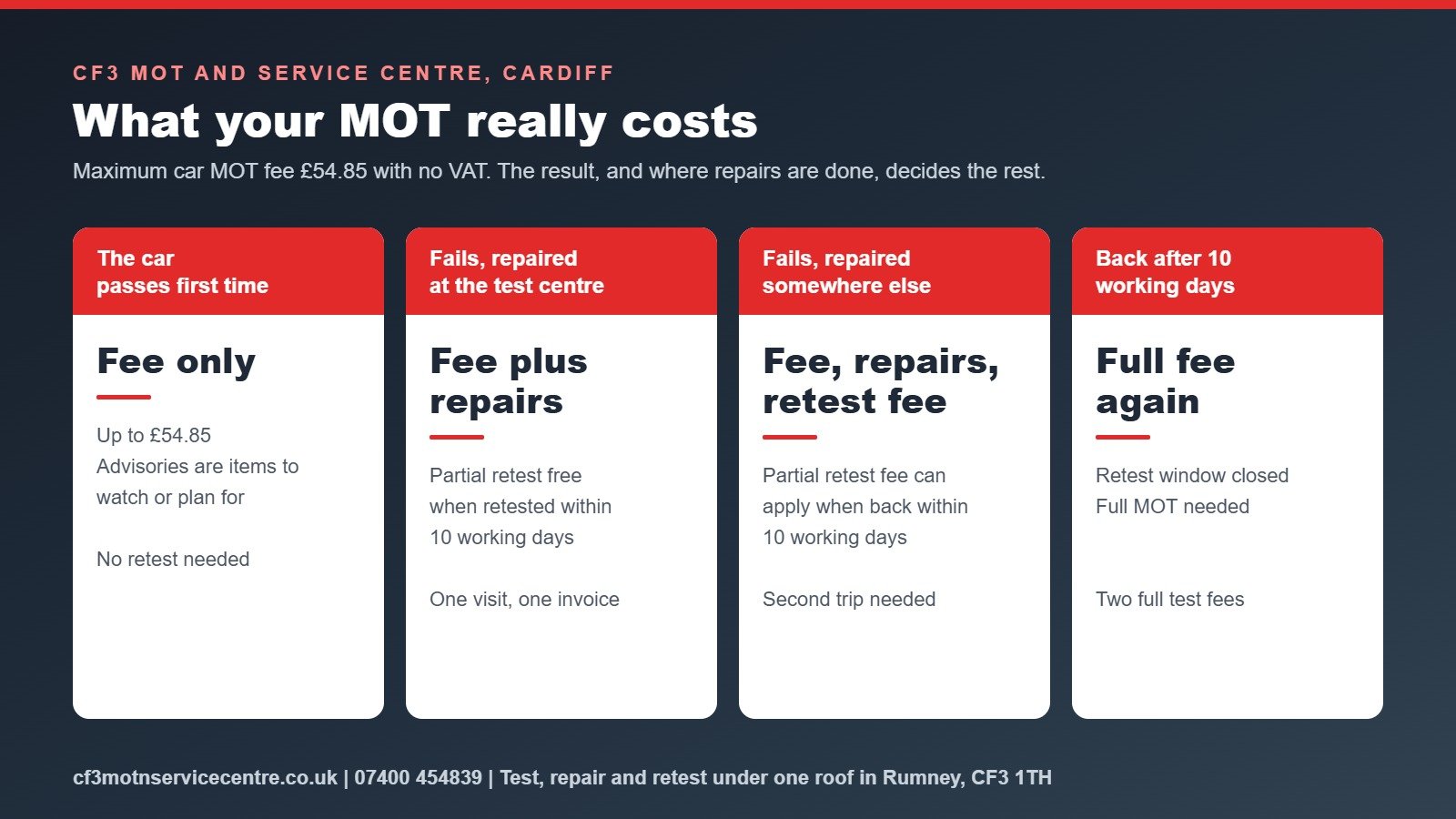
It depends on which of four outcomes you end up in.
The car passes. You pay the MOT fee and nothing else. Any advisories on the certificate are items to watch or plan for, not items you must pay for today.
The car fails and is repaired where it was tested. You pay the fee, plus the agreed repairs. If the car stays at the test centre and is retested within 10 working days, the partial retest has no fee under the government rules.
The car fails and you take it elsewhere for repair. You pay the fee, the repairs at the other garage, and potentially a partial retest fee when you bring the car back within 10 working days. Some simple items can be retested free by the end of the next working day, but for most repairs you should expect a charge.
The car comes back after 10 working days. The retest window has closed, so the car needs a full MOT again and you pay the full fee a second time.
That is why the combination of testing and repairing in one building usually works out cheaper than it looks on paper, even when another garage’s MOT fee is lower.
How do MOT retests work?
There are three routes, and which one applies depends on where the car goes after it fails.
If you leave the car at the test centre to be repaired, and it is retested within 10 working days, you only need a partial retest and there is no fee. If you take the car away for repair and bring it back to the same test centre within 10 working days, you can be charged a partial retest fee. After 10 working days, a full test and a full fee apply.
There is also a free retest route for a list of simpler items. If the car failed only on things such as lamps, wiper blades and washers, mirrors, seatbelts, wheels and tyres, the horn, number plates or doors, and you take it away, fix those items and bring it back to the same test centre by the end of the next working day, the retest is free.
Whatever the route, a car that has failed with a dangerous defect should not be driven away. A car with only major defects can be driven if its existing MOT certificate is still valid, but it must still be roadworthy.
Which MOT failures push the bill up?
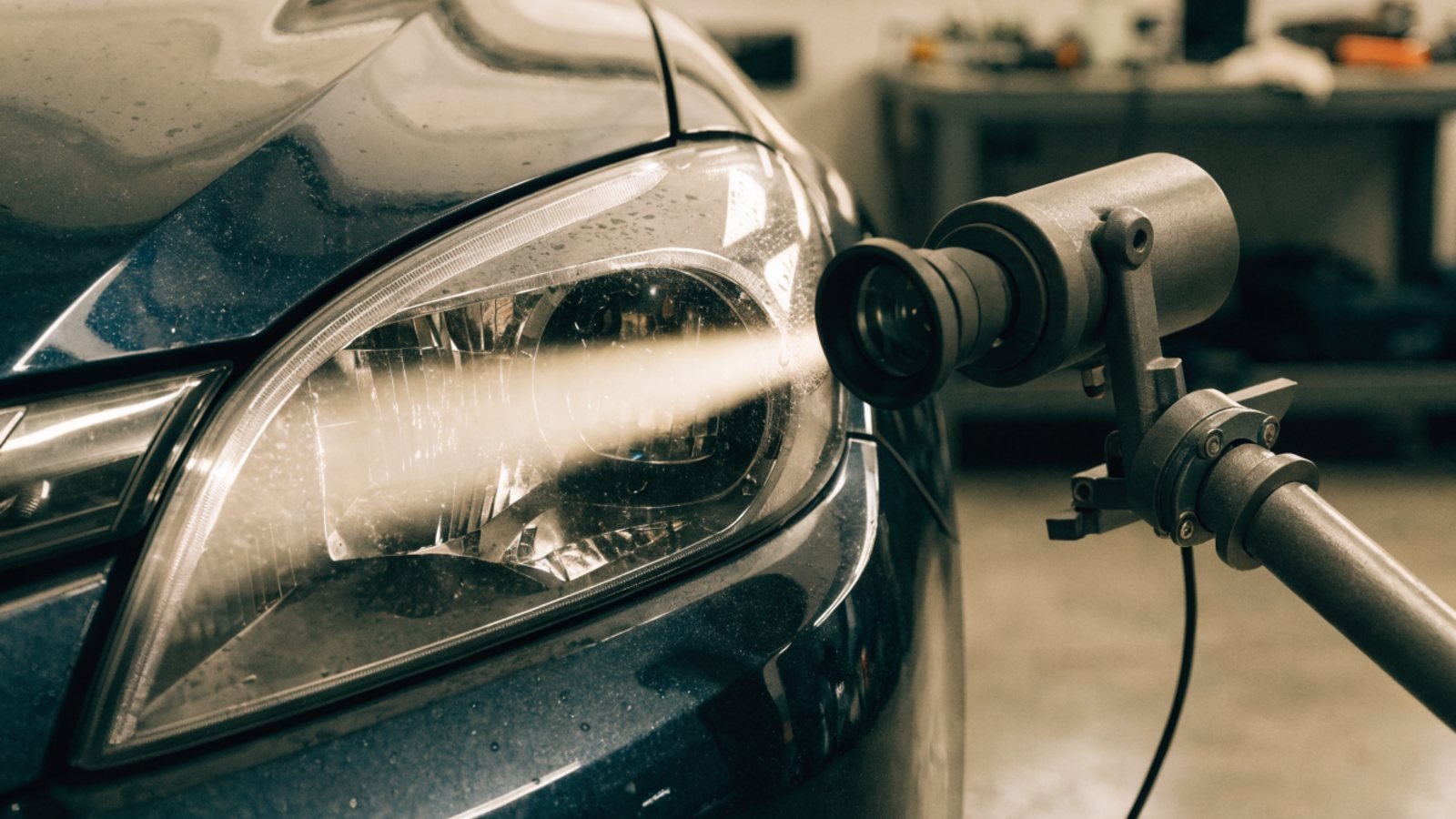
The cheap failures are the ones you can see. A blown bulb, a split wiper blade, an empty washer bottle or a number plate light that has stopped working costs very little to fix, and most can be checked on your drive before the test.
The failures that decide the final bill are usually underneath or inside the car:
- Tyres. Less than 1.6mm of tread across the central three quarters of the tyre, or a cut or bulge, means new tyres, often in pairs.
- Brakes. Worn pads and discs, corroded brake pipes, seized calipers or an imbalance on the brake test.
- Suspension. Broken coil springs, worn ball joints and perished bushes.
- Corrosion. Structural rust near load-bearing points, which may need welding. Our guide to failing an MOT on corrosion explains what can be repaired.
- Warning lights and emissions. An engine management light that stays on is a failure on most petrol cars first used from 2003 and diesels from 2008. Our guide to engine management light causes covers the usual suspects.
A pre-MOT check finds most of these before the test, which turns an unexpected bill into a planned one. Our guide to why cars fail their MOT in Cardiff goes further into each item.
A typical example of how the bill builds. A driver books the cheapest MOT they can find for their ten year old hatchback. It fails on a front coil spring and a corroded brake pipe. The repair quote at that garage is higher than they expected, so they take the car away, get the work done somewhere else a few days later, and bring it back for a partial retest, paying the retest fee. Add the second trip, a day off work and the retest charge, and the saving on the MOT fee has gone. The same repairs done where the car was tested, with the free partial retest, would have cost less in money and in time.
Is an MOT and service together cheaper?
Often, yes. Many garages, ourselves included, discount the MOT when it is booked with a full or major service, and even where the saving is small, you save a second drop-off and a second day without the car.
There is a practical benefit on top of the price. The service puts the car on a lift and gives it a thorough look over first, so worn brakes, a tired tyre or a failed bulb can be dealt with before the tester sees them. The MOT then becomes a formality rather than a gamble.
If your car is also due a service, our guide to car service prices in Cardiff explains the difference between interim, full and major services and what each typically costs.
When should I book my MOT, and what if I miss the date?
Book it up to a month, minus a day, before your current certificate runs out. If the car passes in that window, the new certificate runs for a year from the old expiry date, so booking early costs you nothing. A new car needs its first MOT by the third anniversary of its registration.
You can check when your MOT is due, and see the full MOT history of your car including past advisories, free on GOV.UK. GOV.UK also offers free MOT reminders by text or email.
If you miss the date, the car should not be driven except to a pre-booked MOT test or to a garage for repairs needed to pass. Driving without a valid MOT can bring a fine of up to £1,000. Driving a car that has failed with a dangerous defect can mean a fine of up to £2,500, a driving ban and 3 penalty points. It can also cause problems with your insurance, so check your policy.
What about motorhomes and larger vans?
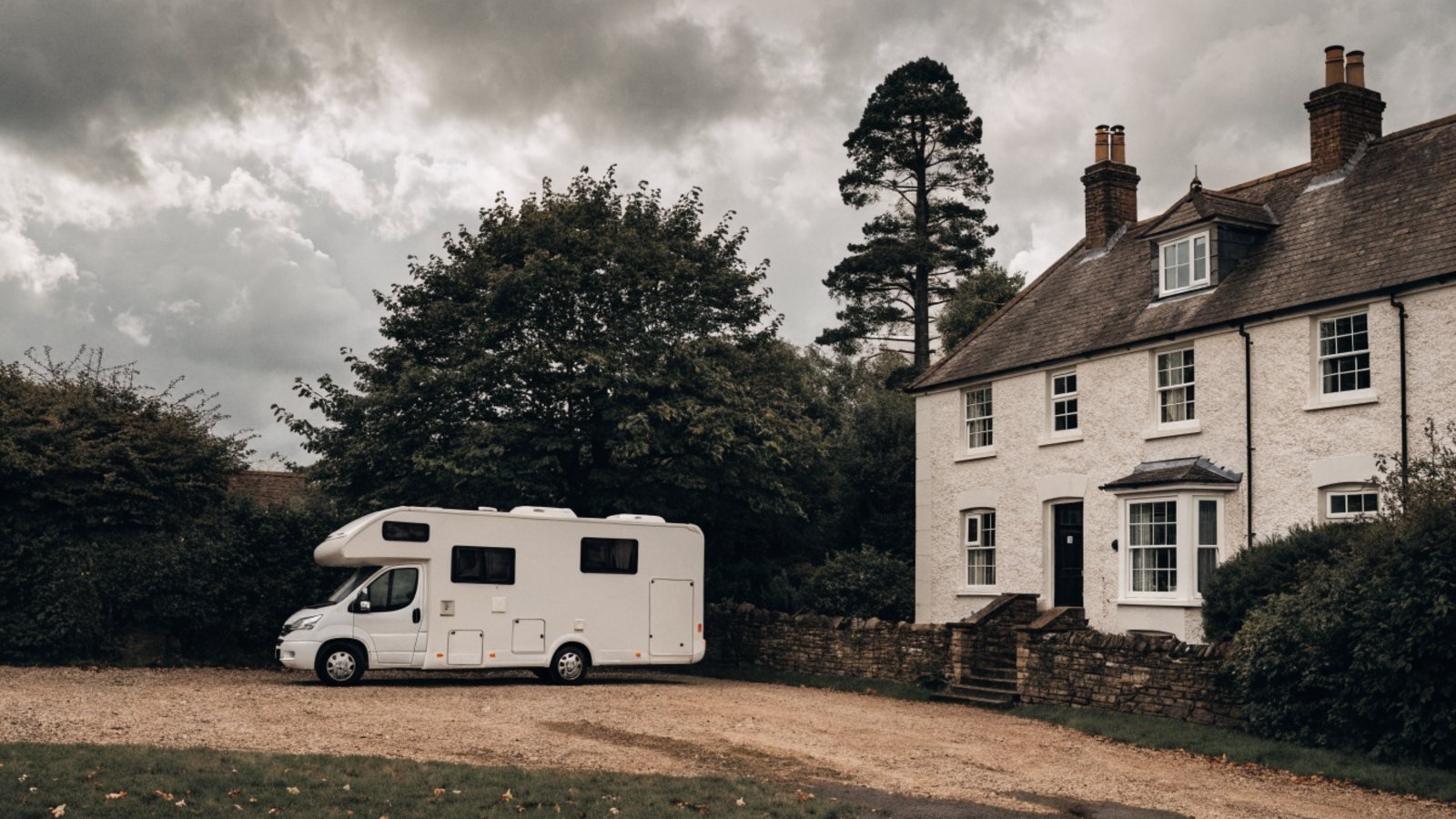
The class, and so the maximum fee, depends on the vehicle’s design gross weight, which is shown on the plate. A motorhome or van up to 3,000kg is normally Class 4, at up to £54.85. Goods vehicles over 3,000kg and up to 3,500kg are Class 7, at up to £58.60. Motorhomes have their own rules on which class applies, and our guide to whether a motorhome MOT is Class 4 or Class 7 sets them out.
The practical point is to check the class before you book, because not every test centre has the equipment or the approval for every class, and a larger vehicle may not fit every test bay.
What does an MOT cost at CF3 MOT and Service Centre?
Our MOT price is shown when you enter your registration in the booking form on this page, and we will confirm it if you ring. Our fee sits within the government maximum, and when the MOT is booked with a full or major service it is discounted.
If the car fails, we explain every item, give you an itemised price, and wait for your agreement before we start. Leave the car with us for the repair and the partial retest within 10 working days is free. We are on Wentloog Road in Rumney, a short drive from St Mellons, Llanrumney and the rest of east Cardiff, and evening appointments after 5pm are available when pre-booked.
Test, repair and retest in one place
Ring 07400 454839 or book online. We will confirm the MOT price, price any repairs before we start, and retest free if the car stays with us.
MOT cost questions
How much is an MOT in Cardiff in 2026?
The maximum fee for a car MOT is £54.85, with no VAT. Many Cardiff garages charge less, with standalone MOTs listed from around £40 on booking sites in September 2026.
Is there VAT on an MOT?
No. There is no VAT on the MOT fee. VAT does apply to repairs, parts and services booked alongside the test.
Is the MOT retest free?
It is free if the car is left at the test centre for repair and retested within 10 working days, and for certain simple items fixed and returned by the end of the next working day. Otherwise a partial retest fee or a full fee can apply.
Is a cheaper MOT a worse test?
No. Every test follows the same DVSA standard and is recorded on the national database. The difference between garages is in how repairs and retests are priced.
Can I get an MOT early?
Yes. You can have the test up to a month, minus a day, before the current certificate expires and keep the same renewal date.
What is the fine for no MOT?
Up to £1,000 for driving without a valid MOT. Driving a car with a dangerous defect can bring a fine of up to £2,500, a ban and 3 penalty points.
Know the full cost before the test
Ring CF3 MOT and Service Centre on 07400 454839 or book online. We are on Wentloog Road in Rumney, we collect and deliver across CF3, CF23, CF24 and out to CF15, and courtesy cars are available for longer jobs.
