
Book Online
07400454839
-
By: Ali Hindal
- 0 Comments
An engine management light means the car’s engine computer has spotted a fault that could affect emissions or how the engine runs, and stored a code for it. The ten most common causes are misfires from spark plugs or ignition coils, an oxygen sensor, the mass air flow sensor, the EGR valve, a blocked diesel particulate filter, a boost leak or turbo sensor fault, the catalytic converter, a coolant temperature sensor or thermostat, a fuel vapour leak, and wiring or battery voltage problems.
The light itself does not tell you which one it is, or how serious. A steady amber light usually means book the car in soon. A flashing light means slow down and stop when it is safe, because the engine is misfiring badly enough to damage expensive parts. This guide explains each cause, what it tends to feel like from the driver’s seat, how urgent it is and what the repair usually involves.
Engine light on right now?
Tell us what the light is doing and how the car is driving. If it is safe to drive, book engine diagnostics. If it is flashing or the car is losing power badly, ring us first.
Engine management light, at a glance
- A steady light means a fault has been stored; most cars can be driven gently to a garage.
- A flashing light usually means a severe misfire; reduce speed and stop when it is safe.
- The most common causes are ignition parts, sensors, the EGR valve and, on diesels, the DPF.
- A code reader gives a starting point, not a diagnosis. The same code can have several causes.
- An engine management light that stays on is an MOT major defect on most petrol cars from 2003 and diesels from 2008.
- Clearing the code without fixing the fault usually just brings the light back later.
What does the engine management light actually mean?
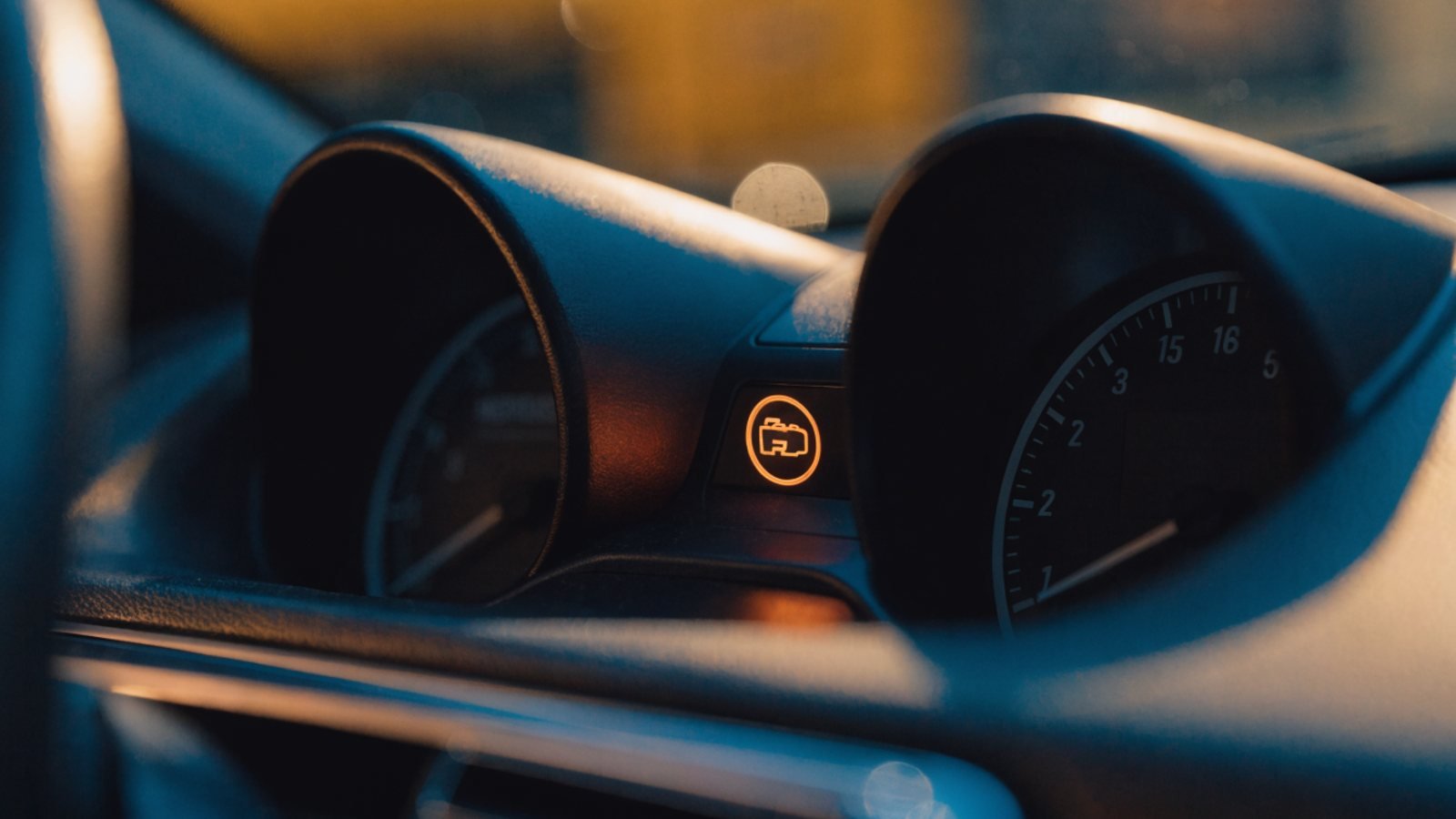
It means the engine control unit has seen a reading outside the range it expects and has logged a fault code. Modern cars monitor dozens of sensors every second: air coming in, fuel going in, oxygen in the exhaust, engine temperature, crankshaft and camshaft position, boost pressure and more. When one of those readings stays wrong for long enough, the light comes on.
Every petrol car sold new in the UK from 2001 and every diesel from 2004 has a standard diagnostic socket, known as EOBD, so any garage with the right equipment can read the stored codes. That is where finding the cause starts. It is not where it ends, because one code can have several different causes, and that is why the rest of this guide matters.
Before looking at the causes, the first decision is whether to keep driving.
Is it safe to drive with the engine light on?
If the light is steady and the car drives normally, it is usually safe to drive gently to a garage in the next few days. Avoid hard acceleration, long motorway runs and towing until it has been checked.
If the light is flashing, slow down and stop as soon as it is safe. A flashing light normally means the engine is misfiring badly, and unburnt fuel is going into the exhaust, where it can overheat and destroy the catalytic converter. That turns a spark plug or coil repair into a much bigger bill.
Stop and call for help rather than driving on if the engine light comes on with any of these: a high temperature gauge, an oil pressure warning, heavy smoke, a strong smell of fuel, loud knocking, or a sudden and severe loss of power. In those cases our vehicle recovery service can bring the car in rather than risk further damage.
Many cars also go into limp mode when the fault is serious, limiting revs and power to protect the engine. Limp mode gets you off the road safely. It is not a way to carry on as normal.
What are the ten most common causes?
These are the faults that most often sit behind an engine management light, roughly in the order a technician will think about them. Each one lists what you might notice and what the fix usually involves.
1. Spark plugs and ignition coils
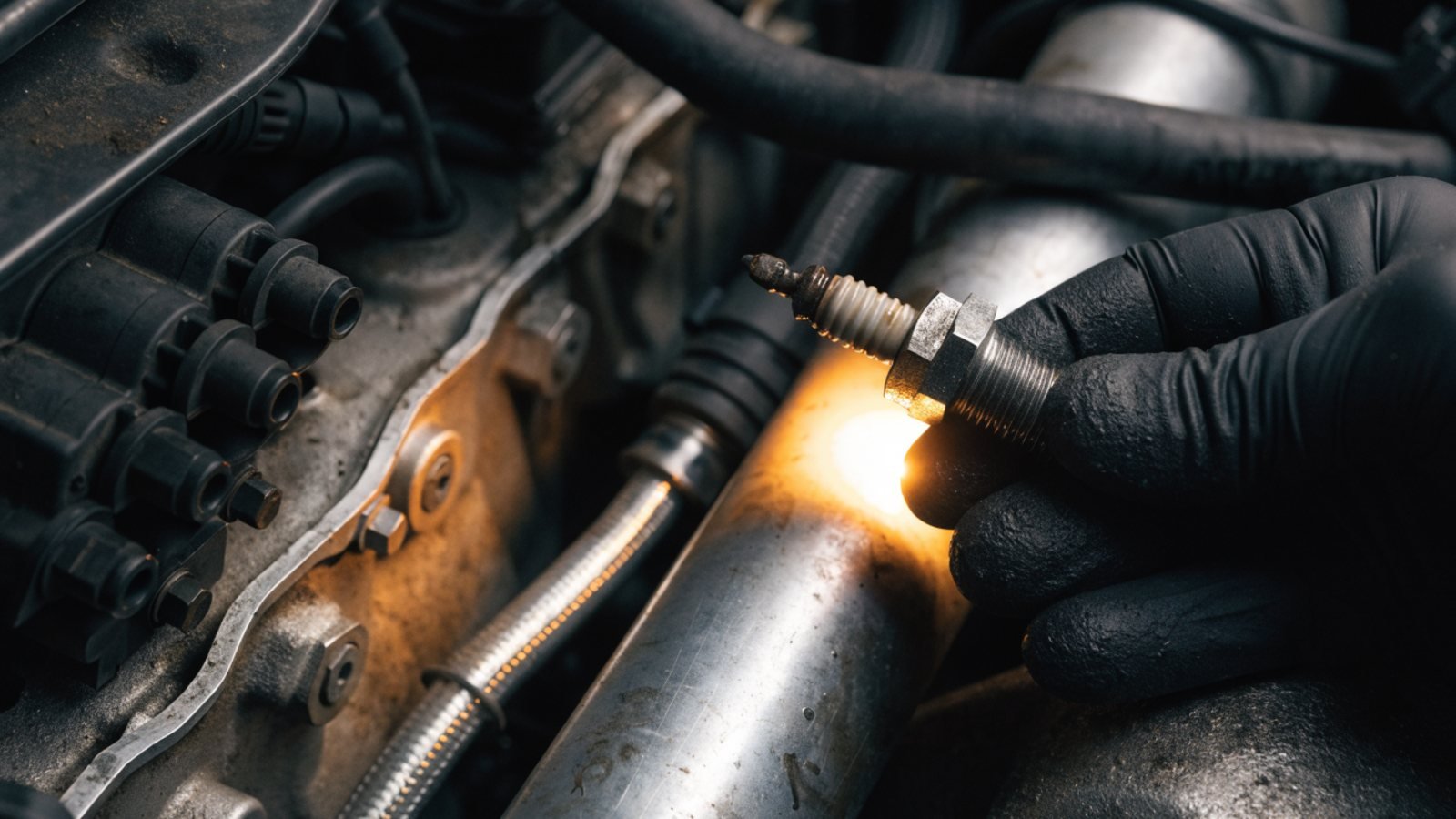
On a petrol engine, a worn spark plug or a failing ignition coil causes a misfire: the engine shakes at idle, hesitates when you accelerate and may feel like it is running on fewer cylinders. This is the most common reason for a flashing light. The fix is usually replacing the plugs, the faulty coil or both. Plugs are a service item, so an overdue major service is often part of the story.
2. Oxygen (lambda) sensor
Oxygen sensors in the exhaust tell the engine computer how rich or lean the mixture is. When one fails, fuel economy drops and emissions rise, although the car may feel almost normal. The repair is replacing the sensor, but only after checking that the sensor is the problem and not an exhaust leak or a mixture fault that is making a healthy sensor read wrongly.
3. Mass air flow sensor
The mass air flow sensor measures the air entering the engine. A dirty or failing one causes flat spots, hesitation, poor economy and sometimes stalling. A split or loose intake hose after the sensor can cause the same symptoms by letting in air the sensor never measured, which is why a technician checks the pipework before replacing the part.
4. EGR valve
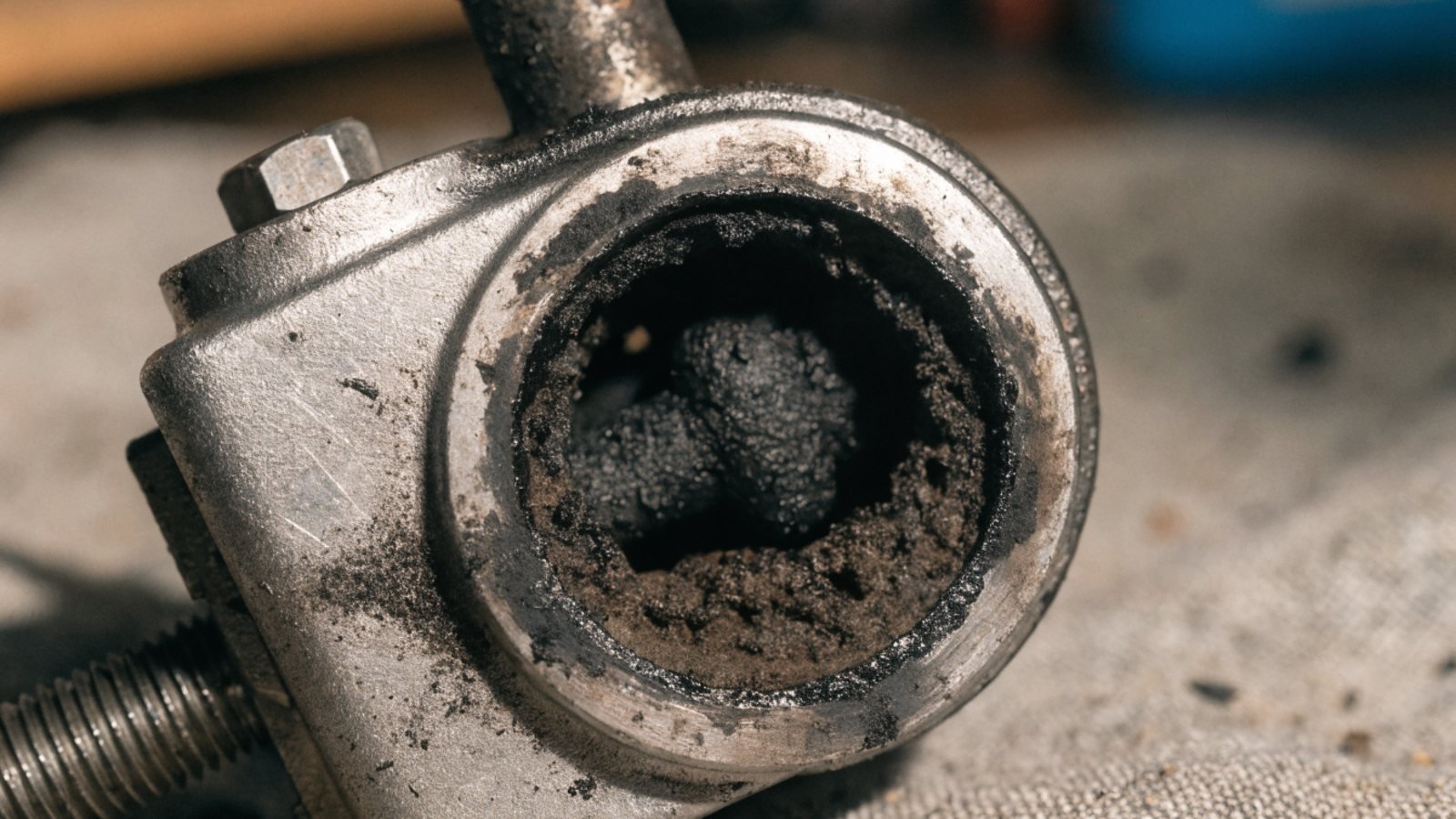
The exhaust gas recirculation valve feeds a little exhaust back into the intake to reduce emissions. Over time, especially on diesels that do a lot of short trips, carbon builds up and the valve sticks. Symptoms include rough idle, black smoke, poor pulling power and limp mode. Depending on the car, the valve can sometimes be cleaned; otherwise it is replaced.
5. Diesel particulate filter
On diesels, a blocked DPF often brings on the engine light along with its own warning. Short journeys stop the filter from burning off its soot, back pressure builds, and the car loses power. Our guide to a blocked DPF explains what a forced regeneration does, and our DPF cleaning service covers what happens when regeneration is not enough. A faulty pressure sensor can also mimic a blocked filter, so it is tested first.
6. Boost leaks and turbo sensors
On turbocharged engines, a split intercooler hose, a loose clamp, a faulty boost pressure sensor or a sticking turbo actuator can all trigger the light. The usual sign is a noticeable loss of power, sometimes with a whistle or whooshing noise under acceleration, and often limp mode. The fix ranges from a new hose to turbo repair, which is why finding the exact cause matters so much here.
7. Catalytic converter
A catalytic converter can fail on its own with age, but it is more often damaged by something else, typically a long-running misfire or oil burning. Signs include a rotten egg smell, rattling from under the car, and poor performance. Replacing a converter without fixing whatever killed it means the new one fails too, so the root cause comes first. Our exhaust repair service covers converters and the rest of the system.
8. Coolant temperature sensor or thermostat
The engine computer uses coolant temperature to decide how much fuel to add. A faulty sensor, or a thermostat stuck open so the engine never warms up properly, leads to heavy fuel use, slow warm-up and a heater that blows lukewarm. Both are relatively simple parts, but a thermostat that sticks closed can cause overheating, so a rising temperature gauge always needs attention.
9. Fuel vapour leaks and the filler cap
Petrol cars have a system that captures fuel vapour from the tank. On cars that monitor it, a filler cap that has not clicked shut, a perished cap seal or a cracked vapour hose can bring on the light without any change in how the car drives. It is worth checking the cap first, but if the light stays on after a few journeys, a smoke test finds the leak.
10. Wiring, connectors and battery voltage
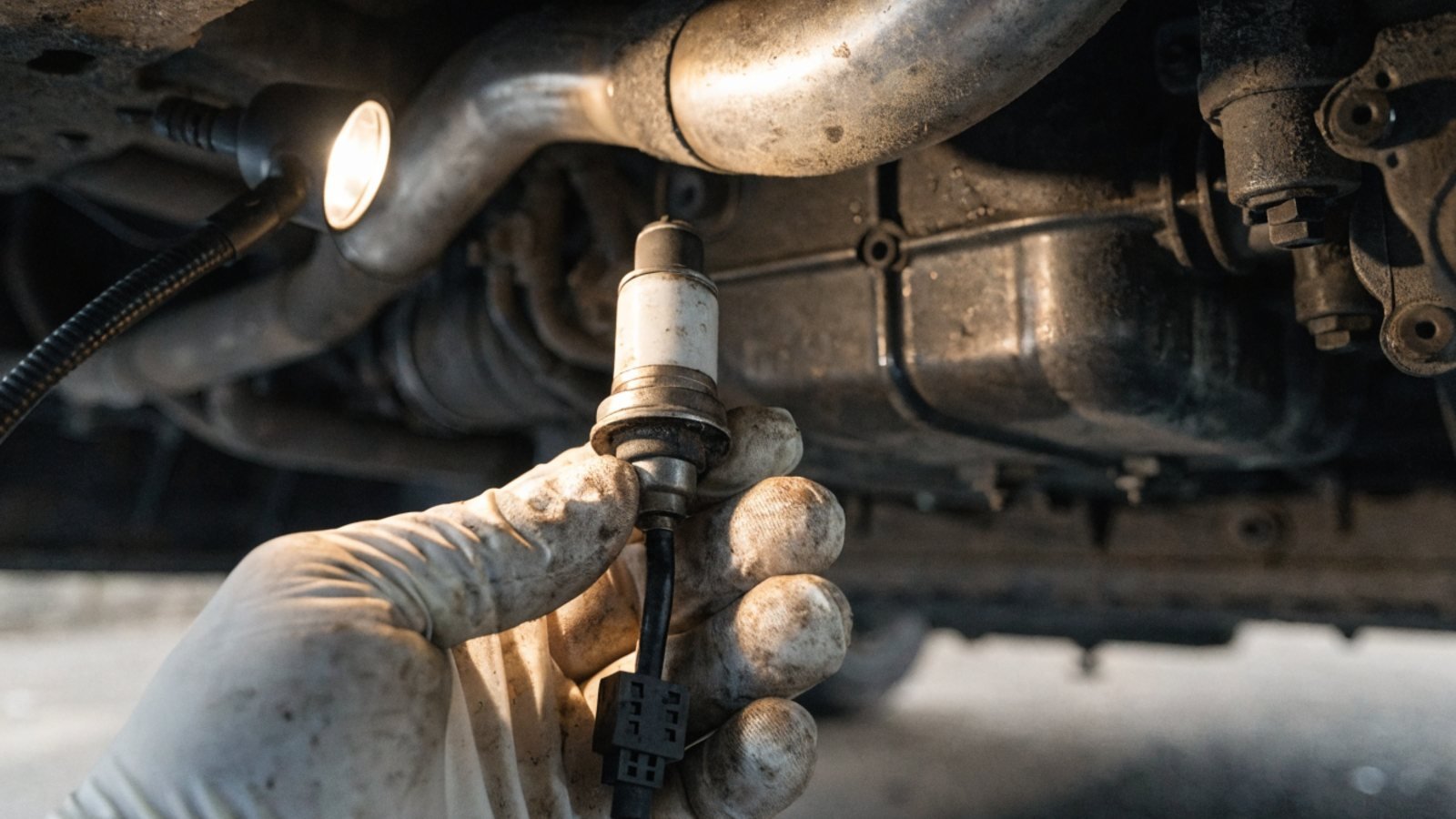
Sensors rely on clean connections and a steady voltage. A corroded connector, a chafed wire, a weak battery or a poor earth can all produce fault codes that point at a perfectly good sensor. Faults that appear after other work, such as a battery change or a repair nearby, often fall into this group. This is the cause most often missed by fitting parts without testing.
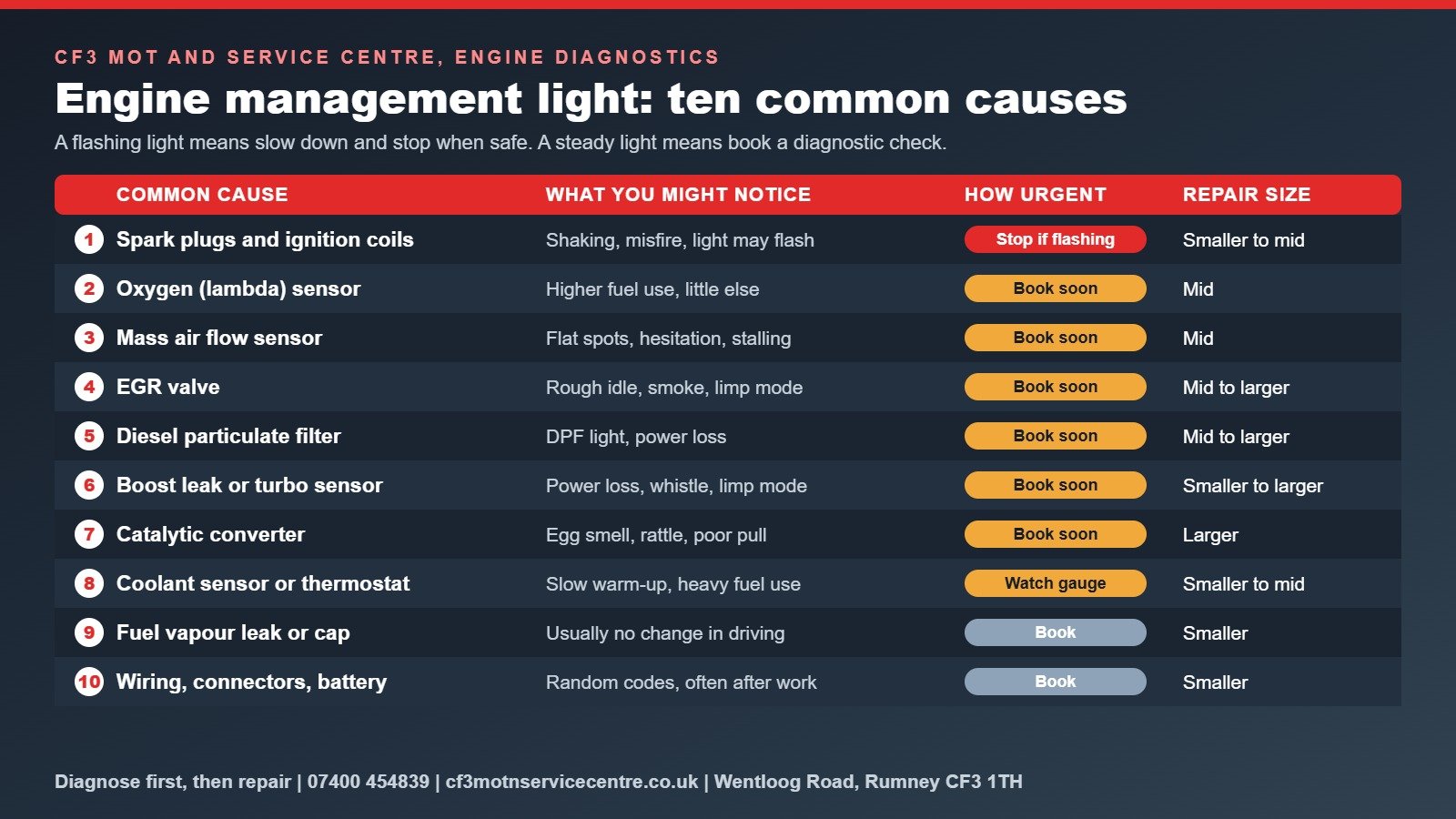
Ten causes is a lot to choose between from the driver’s seat, and that is exactly why a code on its own is not enough.
Why is a code reader not a diagnosis?

Because a fault code tells you which reading looked wrong, not why. A code for a lean mixture might be a failing oxygen sensor, an air leak, a weak fuel pump, a blocked injector or a wiring fault. Replacing the part named in the code is a guess, and guesses get expensive when the light comes back.
Proper diagnosis uses the code as the starting point. A technician looks at live data while the engine runs, checks freeze frame information recorded when the fault happened, tests sensors and wiring with a multimeter or oscilloscope, and uses a smoke test to find air or vapour leaks. The goal is to confirm the cause before any part is ordered.
That is also why clearing the code is rarely the answer. It turns the light off, but it wipes the stored information that helps find the fault, and if the problem is still there the light comes back, often at a less convenient moment.
A typical visit: a diesel comes in with the engine light on and a code pointing at the boost pressure sensor. The driver has already bought and fitted a new sensor after a free code read in a car park, and the light has come straight back. On the ramp, with the engine running and live boost readings on screen, the boost never reaches the value the engine asks for. A smoke test through the intake shows a split in an intercooler hose hidden behind the bumper. The original sensor was fine. A new hose and clips fix the fault, and the code does not return. The first sensor was the most expensive part of the whole job, and it was never needed.
Will the engine management light fail the MOT?
Yes, on most cars. An engine management light that is lit, or that does not come on at all when the ignition is switched on, is recorded as a major defect for petrol cars first used from 1 July 2003 and diesel cars first used from 1 July 2008. A major defect means the car fails.
If your MOT is coming up and the light is on, get the fault diagnosed and repaired before the test. Our guide to MOT cost in Cardiff explains how repairs and retests affect the total, and our pre-MOT check picks up warning lights along with everything else.
How much does it cost to fix an engine management light?
It depends entirely on the cause, which is why diagnosis comes first. Across the ten causes above, the repairs fall into three broad bands:
- Smaller repairs: a filler cap, a connector, a wiring repair, a split vacuum or intake hose, or a set of spark plugs.
- Mid-range repairs: ignition coils, oxygen sensors, the mass air flow sensor, a coolant temperature sensor or thermostat, or cleaning an EGR valve.
- Larger repairs: a replacement EGR valve, turbo work, a catalytic converter, or a diesel particulate filter that cannot be recovered by cleaning.
The cheapest route to the right repair is paying once for diagnosis rather than several times for parts. We give you an itemised quote once the cause is confirmed, and nothing is fitted without your agreement. Our engine management repair page covers the work in more detail.
What does diagnosis at CF3 involve?
You bring the car to our workshop on Wentloog Road in Rumney, or we collect it or recover it if it is not safe to drive. We read the stored codes and freeze frame data, look at live data, test the suspect components and wiring, and road test the car where that helps. Once we know the cause, we ring you with what we found, what the repair involves and the price.
We are a short drive from St Mellons, Llanrumney and the rest of Rumney, and we see drivers from across Cardiff. If the light has come on after work hours, pre-booked evening appointments are available after 5pm.
Find the cause before buying the part
Ring 07400 454839 or book online for engine diagnostics. We confirm the fault, price the repair and wait for your go-ahead.
Engine management light questions
Can I drive with the engine management light on?
If the light is steady and the car drives normally, you can usually drive gently to a garage. If it is flashing, or comes with overheating, low oil pressure, smoke or a big loss of power, stop when it is safe and get help.
What does a flashing engine light mean?
Usually a severe misfire. Unburnt fuel can overheat the catalytic converter, so reduce speed and stop driving as soon as it is safe.
Will the engine light go off by itself?
Sometimes, if the fault was temporary, such as a filler cap not closed properly. If the fault is still there, the light stays on or returns, and the code remains stored.
Does the engine management light fail an MOT?
Yes. A lit engine management light is a major defect on petrol cars first used from 1 July 2003 and diesel cars first used from 1 July 2008.
Is it worth buying a cheap code reader?
It can tell you which system the fault is in, which is useful. It cannot tell you which part has failed, so avoid buying parts on the strength of a code alone.
Why did the light come back after the code was cleared?
Because clearing a code does not fix the fault. When the engine computer sees the same problem again, it stores the code and turns the light back on.
Get the engine light diagnosed properly
Ring CF3 MOT and Service Centre on 07400 454839 or book online. We are on Wentloog Road in Rumney, we collect and deliver across CF3, CF23, CF24 and out to CF15, and courtesy cars are available for longer jobs.
