Renault Twingo MOT: A Lower Arm and a Starter Motor
  • Home
  • Renault Twingo MOT: A Lower Arm and a Starter Motor

Renault Twingo MOT: A Lower Arm and a Starter Motor

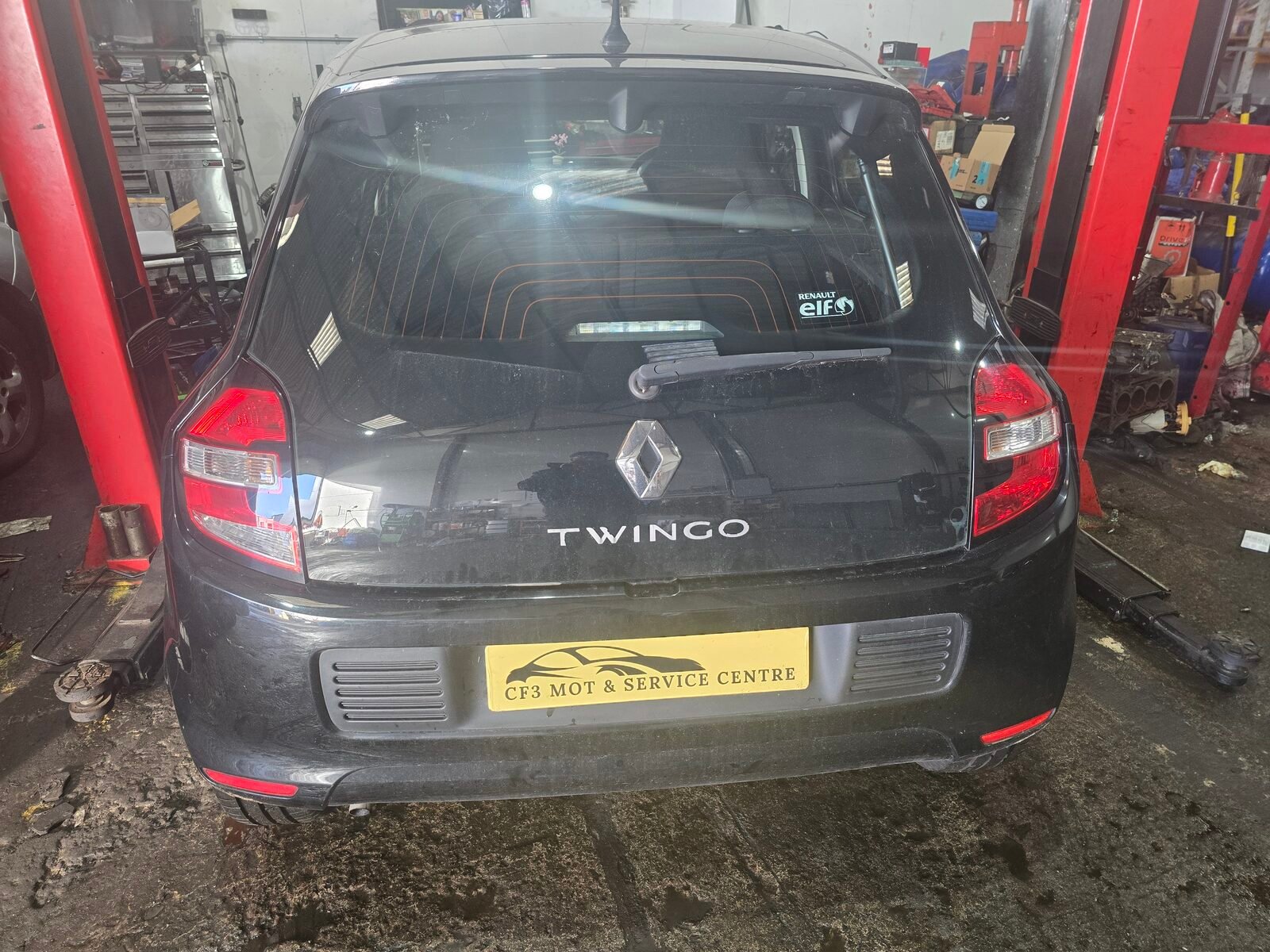
A small Renault Twingo in the rear engined shape standing on the workshop floor at CF3 in Rumney, Cardiff, booked in for its MOT with the tailgate end turned towards the ramps.

A Renault Twingo came into our Rumney workshop for an MOT. It is the rear engined shape, so the engine and the starter motor sit at the back rather than under the bonnet at the front. Two items were identified. One was a lower suspension arm. The other was a starter motor. They belong in different categories, and that is the subject of this page. A lower suspension arm is an MOT matter, because the ball joint, the bush and the rubber boot are all testable. A starter motor is not an MOT item at all. It turned up because the car has to start before it can be tested.

The two findings on this page are the items identified at the test. Nothing here states what the work cost or what the owner decided to do.

MOT due, with a knock at the front or an engine that is slow to turn over? Book it in for an MOT at our Rumney test station, where the check comes before the quote and what was found goes on the job sheet next to the price.

  • The car was a Renault Twingo in the rear engined shape, booked in for an MOT.
  • Two items were identified: a lower suspension arm and a starter motor.
  • A lower suspension arm is a testable MOT item. The ball joint, the bush and the rubber boot are all covered.
  • A starter motor is not an MOT item. Nothing about starting appears on the tester's list.
  • It came up because the car has to start before it can be tested, so every tester hears the engine crank.
  • Play at a lower arm is found with the car raised and a bar under the wheel, not by reading a fault code.
  • Ball joint play and wheel bearing play feel the same to a driver and are separated by where the movement shows.
  • Suspension and brake items are the commonest reason cars fail, so an arm found at MOT time is normal.
  • Replacing an arm disturbs the front geometry, so alignment follows the repair.

What the car came in for, and why two findings are not one job

The same Renault Twingo waiting its turn inside the Rumney workshop, booked in as an MOT rather than as a repair, with the engine and the starter motor sitting behind the rear seats.

The booking was an MOT. There was no report of a knock, no complaint about the steering and no mention of slow starting, and the car arrived under its own power. That is how most of these jobs begin, because the MOT is the one appointment a car keeps whether or not anything feels wrong.

Two items came out of the visit, and they sit on opposite sides of a line. One is a defect a tester is allowed to write on an MOT sheet. The other is a condition a workshop notices because the engine has to turn over in front of it. Both were found on one visit, and that matters. A car tested, taken home, then booked back in for the starting fault has been on the ramp twice for one trip of work.

An MOT sheet records what the test covers. A workshop notices what the car is doing while it is there. Those are two different lists.

What was found on the ramp, and how it was found.

The car had to start before it could be tested

An MOT begins with the car running. The engine is needed for the emissions check, for the lights, for the horn and for moving the car between bay and ramp. Every tester therefore hears the engine turn over, and a starter that is slow, noisy or reluctant to engage announces itself then. On this Twingo a starter motor was identified. It does not go on the MOT sheet, because it is not a testable item, and the owner still needs told.

Play at the lower arm, found with a bar under the wheel

The car goes up with the wheels hanging. A bar goes under the tyre and the wheel is levered upwards while the joint is watched and felt. Play at the lower ball joint shows as movement between the arm and the hub carrier, with a knock that comes back through the bar. The arm has a second wear point: the rubber bush at the inner end, which lets the wheel shift under braking once it has perished or started to move in its shell. The rubber boot over the joint is testable in its own right. Once it splits, grease leaves and grit arrives, so a split boot is a defect with no play present.
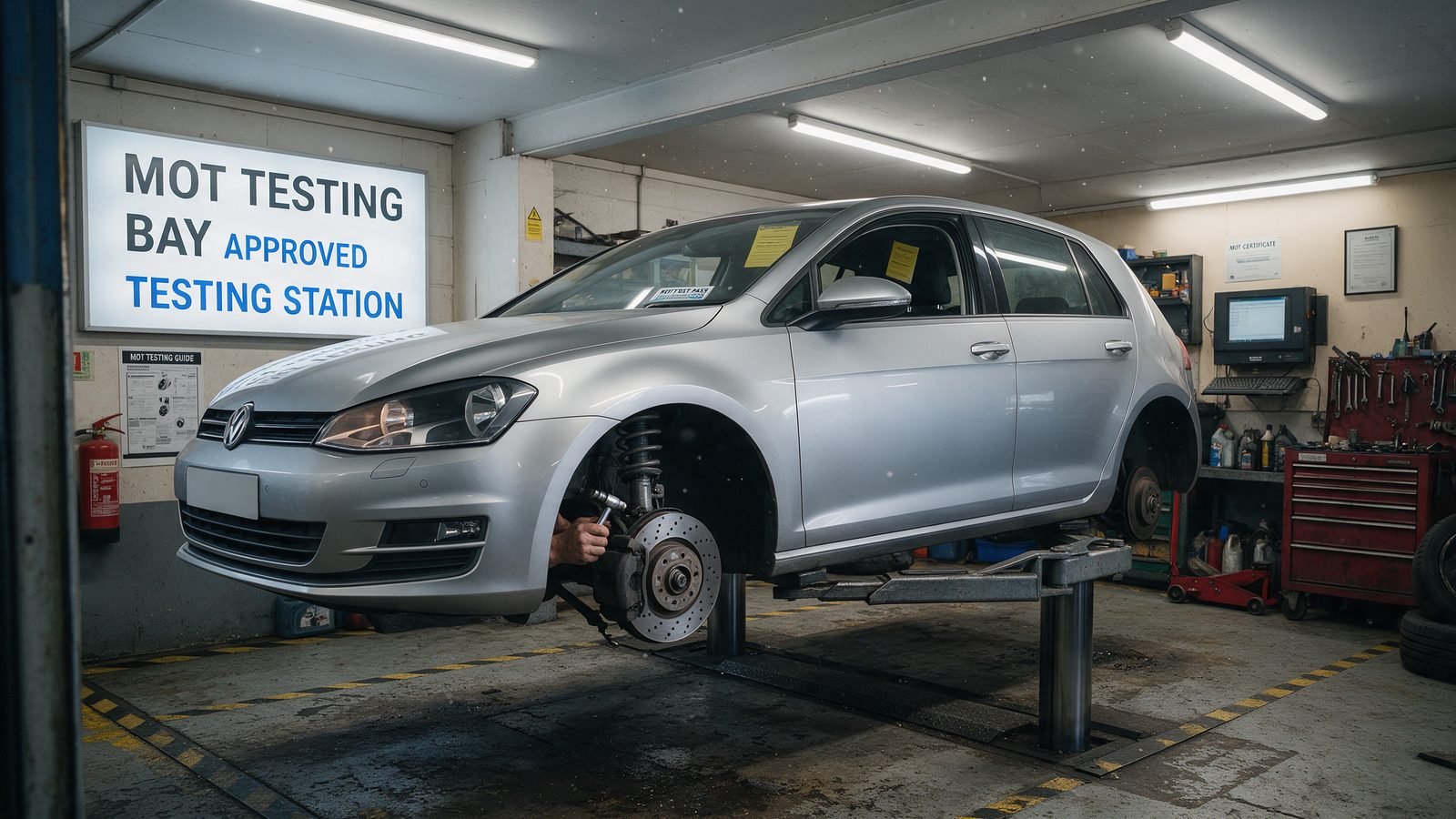
A car raised in the MOT bay while a technician works at the front wheel, checking suspension joints and brake components from underneath, the stage of the job at which play in a lower arm is found.

Ball joint play and wheel bearing play are not the same thing

Both faults produce the same complaint: a knock over rough roads, a vagueness in the steering, a noise that changes with the surface. They are separated on the ramp. Levering the wheel from below and watching the joint shows movement at the ball joint. Rocking the wheel top and bottom, then spinning it and listening, points at the bearing instead. Getting that wrong means buying the wrong part, which is why it is checked by hand.
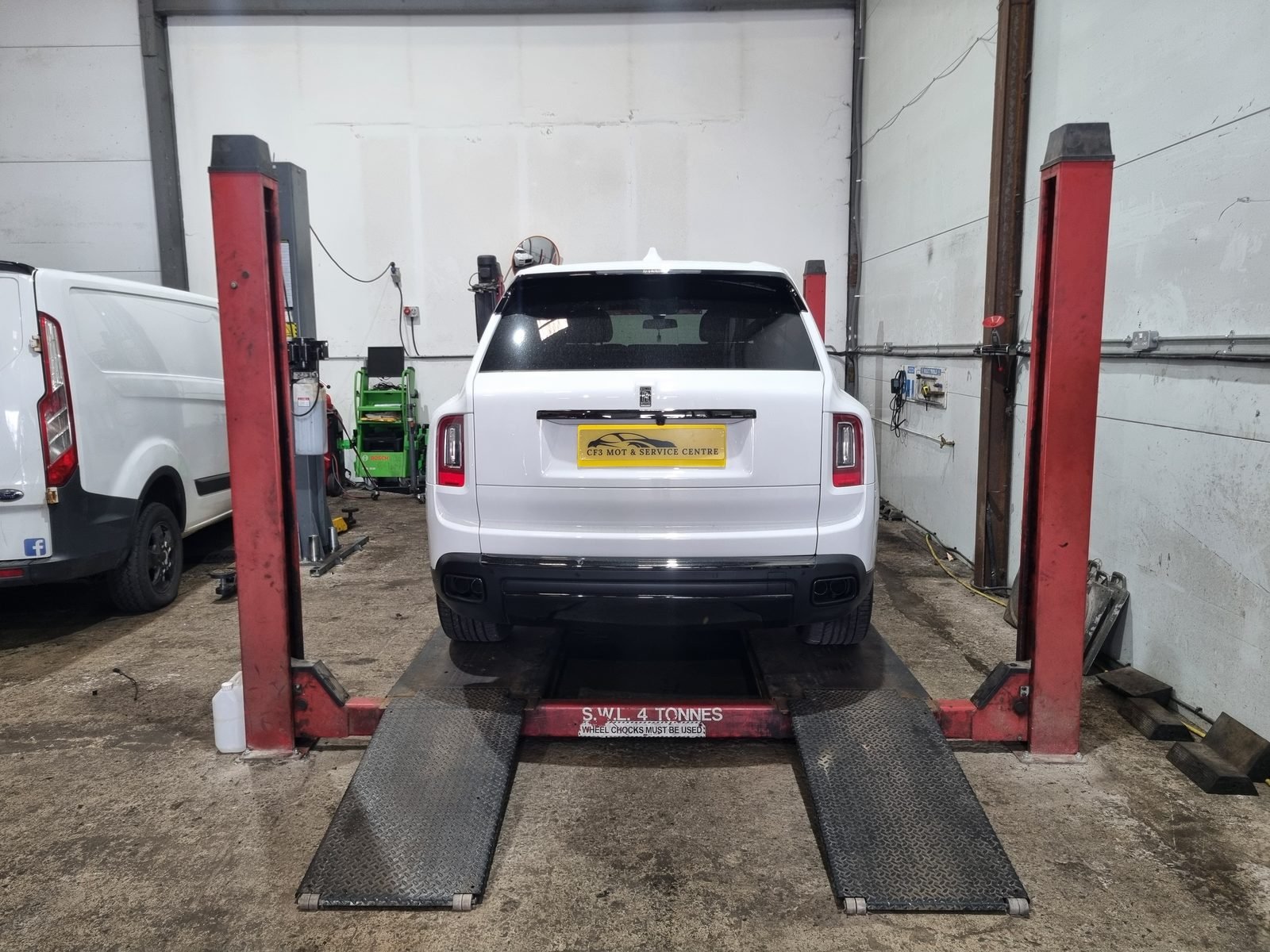
A four post lift in the CF3 workshop in Rumney holding a vehicle at working height, the access needed to get a bar under a hanging wheel and look along the arms, bushes and boots.

// MOT item or not

What a tester is allowed to record, and what a workshop notices anyway

An MOT is a defined test with a defined list. Everything outside that list is still part of the car. The useful distinction is which of these two findings can appear on an MOT sheet and which cannot.

A lower suspension arm is a testable MOT item.

What it means: The ball joint, the bush and the rubber boot are all covered. Excessive play, a split boot or a cracked arm is recorded as a defect, with the corner written beside it.

A starter motor is not an MOT item at all.

What it means: Nothing about starting appears on the test. The finding reaches the owner as a workshop observation, not a defect, and has no bearing on the certificate.

A worn lower arm changes how the car steers and how the tyre wears.

What it means: The arm sets part of the front geometry. Once the joint or the bush has movement in it, the wheel stops sitting where it was set, and the tyre records that on one edge.

A reluctant crank is information, not a verdict.

What it means: Heavy cranking can come from the starter, from the battery or from the cables between them. Which one it is gets established by test, not from the noise it made in the bay.

One finding belongs on the MOT sheet. The other belongs in the conversation at the desk. Both came out of one visit.

Want both lists out of one appointment rather than two?Call 07400454839

Why both findings go on the sheet with the reason attached.

Our position is the same on every job: test it, write down what the test showed, and put that on the job sheet next to the price. Here the lower suspension arm is recorded with what was found and where, and the starter motor is recorded as a workshop observation rather than a test defect. The owner then decides with the evidence in front of them, not from a phone call saying the car needs work. A suspension finding rarely surprises us, because suspension and brake items are the commonest reason cars fail. That is set out in our guide to why cars fail the MOT in Cardiff.

Finding an arm at test time is normal. Ball joints and bushes are wearing parts, Cardiff roads load them hard, and the test is the appointment at which that wear gets measured by someone paid to measure it. What matters is that the defect is described in terms the owner can check: which corner, which part of the arm, and whether the fault is play, a split boot or a perished bush. Our suspension repair page sets out the parts that make up the front corner of a car.

A split ball joint boot is not a cosmetic fault to be watched and left. Once the grease has gone and water is inside the joint, the wear accelerates, and a ball joint that separates takes the wheel with it.

The ways a worn lower arm gets put right.

A lower arm is dealt with in three broad ways, and which one applies depends on how the car was built and on where the play is. All three disturb the front geometry, so wheel alignment follows the repair as part of the job.

Complete arm

Replace the arm complete

The whole arm comes off with the ball joint and the bush already in it. On most cars this is the designed repair, because the joint is pressed or riveted in and is not sold separately. It replaces both wear points at once, so a tired bush does not bring the car back.

Best when

The joint and the bush are both worn

Ball joint

Replace the ball joint alone

Some arms carry a bolt in or pressed in ball joint supplied on its own. Where the bush is sound, that joint is changed and the arm kept. It needs the right press work and the correct torque, because a joint loose in its seat fails again.

Best when

The joint is a separate serviceable part

Related items

The parts that come up alongside

Play traced to a front corner is not always the arm. A drop link at the anti roll bar and a track rod end at the steering rack both knock, and both show movement under the same bar. They get checked together, because stripping one corner twice is wasted work.

Best when

The movement traces past the arm itself

How the lower arm was checked, and how a rear engined starter is reached.

The order of work here is fixed. The car starts, the car goes up, the corner gets loaded by hand, and the findings get written down before anything is priced. A pre MOT check runs the same sequence before the test rather than during it, which is the difference between knowing about an arm in advance and hearing about it at the desk.

The rear engined layout matters in a practical way. On this shape of Twingo the engine sits at the back and the starter motor sits with it, so there is nothing to reach from the front bay. Access is from underneath at the rear with the car raised, working around the exhaust and the rear subframe instead of leaning over a wing. Knowing that before the car goes up is the difference between a planned job and a surprise, and it is the thinking behind our car safety checks as well.

Start the engine

The car has to run to be tested, and the way it cranks is heard at that moment.

Raise the car

Wheels off the ground and hanging free, so the joints can be loaded by hand.

Bar under the wheel

Lever the wheel upwards and watch the ball joint for movement against the hub carrier.

Inspect the bush and the boot

Look for a split boot, lost grease, and a bush that has shifted inside its shell.

Separate bearing play from joint play

Lever it, then rock it and spin it, so the right part is named before anything is ordered.

Write it down, then price it

Each finding goes on the sheet with its location, and the owner decides from there.
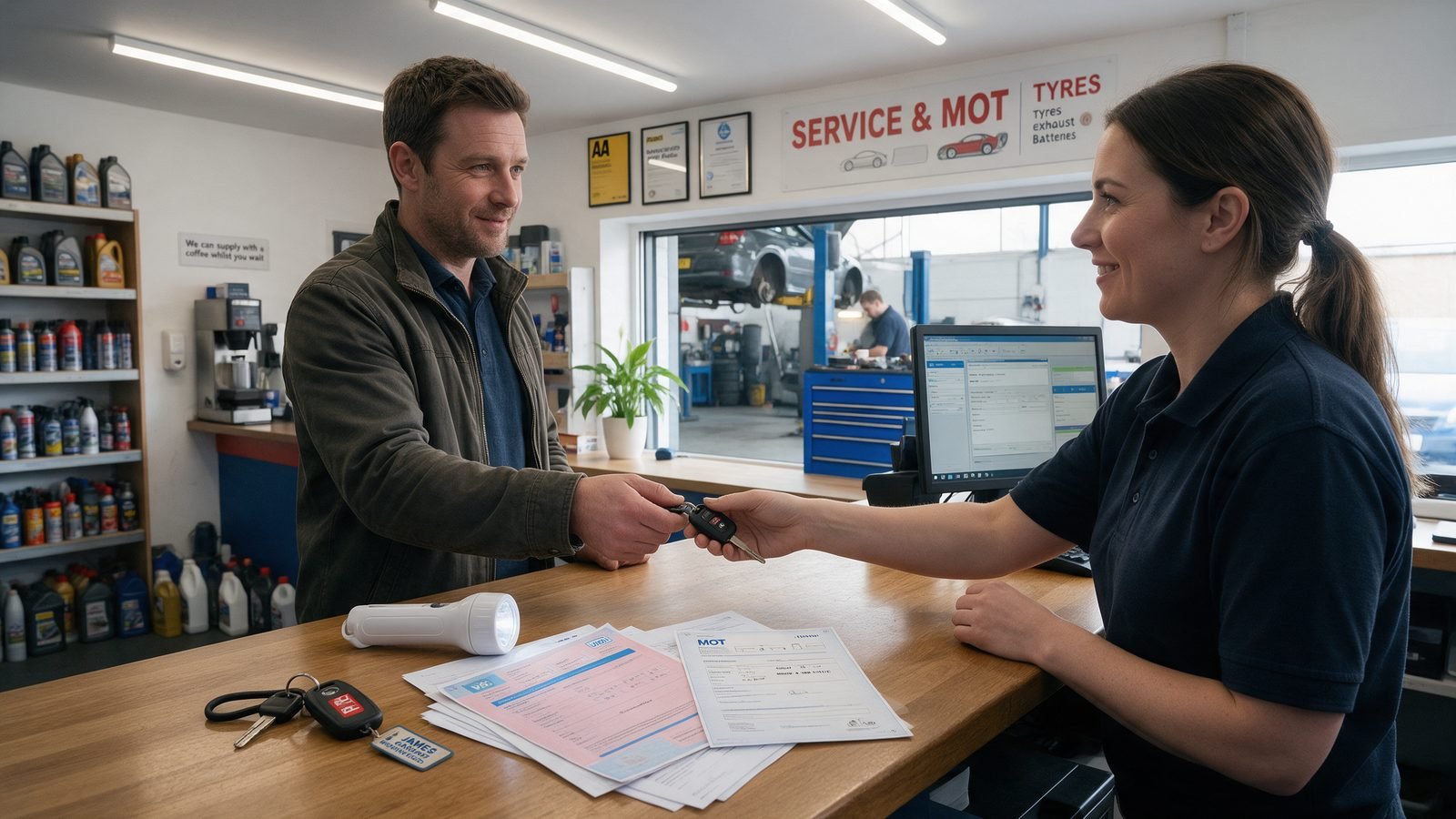
Keys and MOT paperwork changing hands over a garage reception counter, the final stage of the job where each finding is named with its location and the owner is left to decide.

// The result

An MOT visit that produced one testable defect and one that is not

The Twingo came in for an MOT and two items were identified: a lower suspension arm, which is testable, and a starter motor, which is not. What the owner chose to do is not described here. What is described is what was found and how.

Both came out of one visit, and that is the argument for having the test done somewhere that also repairs cars. A station that only tests hands you a sheet. A workshop that tests and repairs hands you the sheet and tells you about the starter it heard cranking.

MOT due, or something knocking at the front?Call 07400454839
Next step

Have the front corner checked while the car is already up

We are a DVSA approved test station and workshop on Wentloog Road in Rumney, a few minutes from St Mellons and Llanrumney. If something is knocking over rough roads, or the car is heavy to turn over, bring it in and we will check it before we price it. If you need to stay mobile while the work is done, ask about a courtesy car when you book.

MOT, suspension and starter motor questions.

Is a lower suspension arm an MOT failure?

A lower suspension arm fails an MOT when the ball joint has excessive play, when the rubber boot over that joint is split, or when the arm or its bush is cracked, perished or insecure. The tester records the defect and names the corner it was found on.

Is a starter motor part of the MOT test?

A starter motor is not part of the MOT test. Nothing about starting or cranking appears on the list of testable items, so a tired starter cannot cause a fail on its own. It is still worth knowing about, because the car has to start before the test can be carried out.

How do you tell a worn ball joint from a worn wheel bearing?

The two are separated on the ramp rather than from the driving seat. A bar under the tyre loads the ball joint, and the movement shows between the arm and the hub carrier. Rocking the wheel top and bottom and spinning it to listen points at the bearing instead. The symptoms overlap, the checks do not.

Is slow starting the battery or the starter motor?

Heavy cranking comes from the starter, from the battery, or from the cables and earths between them. The battery is tested first because it is the quickest to rule in or out, and a weak battery makes a healthy starter sound tired. Our battery testing and fitting page covers that check.

Why does a rear engined car need different access for the starter?

The starter motor always sits with the engine. On a rear engined car that puts it at the back, so the job is approached from underneath at the rear with the car raised, rather than from the front bay. Nothing about the part itself changes. Where the technician has to work does.

Do I need wheel alignment after a suspension arm is replaced?

Yes. Replacing a lower arm moves the mounting points that set part of the front geometry, so the alignment is checked and reset afterwards. Leaving it out gives you a car that steers off centre and wears one edge of a new tyre away, which costs more than the alignment it saved.

Where are you, and can you test the car soon?

We are on Wentloog Road in Rumney, Cardiff, CF3 1TH, close to St Mellons and Llanrumney. Call 07400 454839 to book a test. Our Rumney garage page has the opening times, and there are more jobs like this one in our case studies.