Book Online
07400454839
-
By: Ali Hindal
- 0 Comments
A gearbox service and a clutch replacement are separate jobs sharing one expensive step: on almost every car the gearbox must come off the engine before anyone can reach the clutch. Booking them apart means paying twice for the same labour.
The hard part is working out which job your car needs. A heavy, notchy or noisy change can come from the clutch, from the gearbox internals, or from the linkage and hydraulics between the lever, the pedal and the box. Those three faults feel different, and drivers mix them up constantly.
This guide separates the symptoms so you book the right job once, then explains why a clutch job is the cheapest moment to change your gearbox oil.
Gearbox and clutch work in Cardiff, at a glance
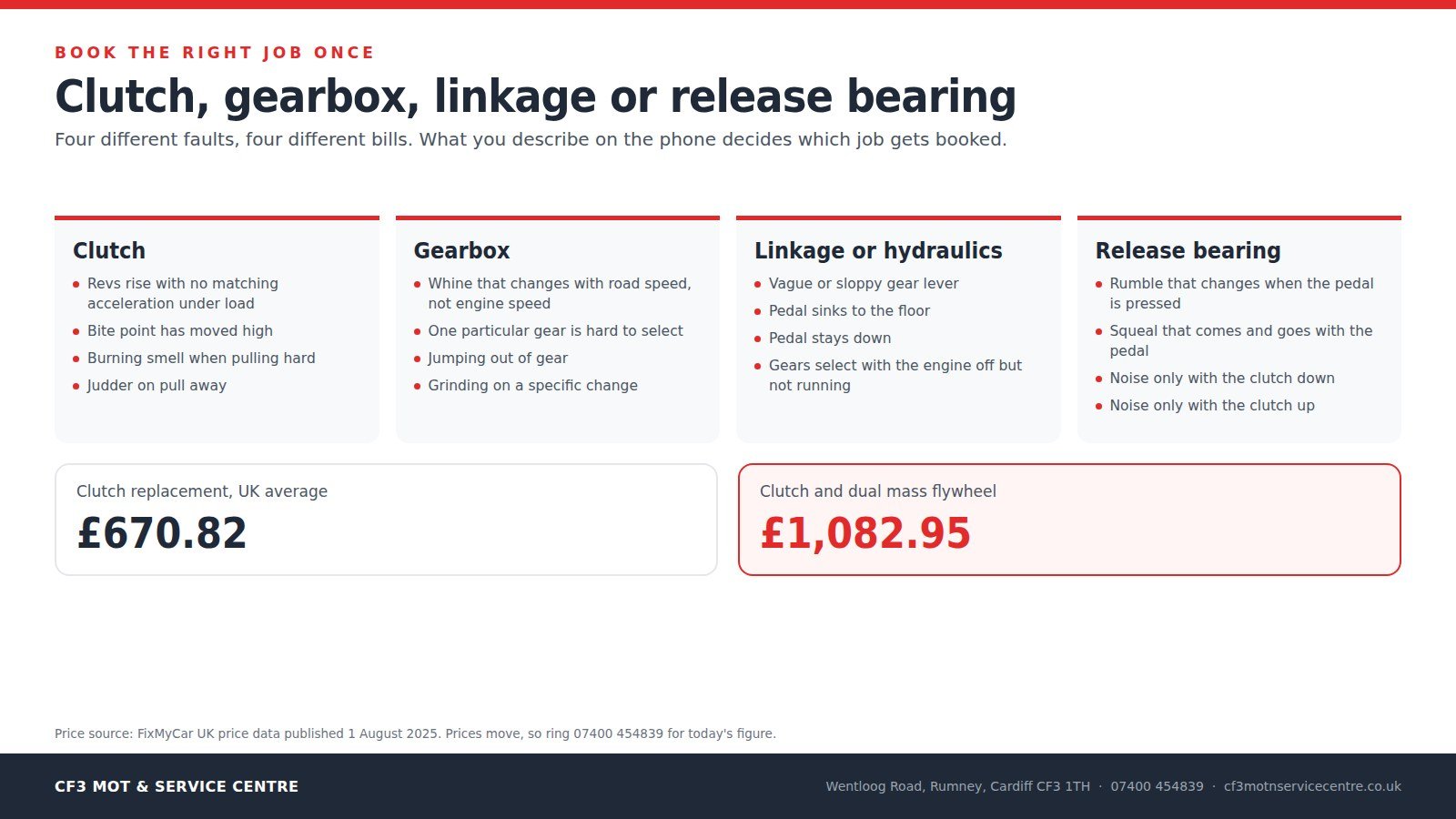
- Clutch symptoms appear under load. Your revs rise while the car fails to accelerate, and the bite point creeps up the pedal.
- Gearbox symptoms follow road speed. A whine rising and falling with wheel speed rather than engine revs points at bearings or gears in the box.
- Linkage and hydraulic symptoms appear at the lever or the pedal. A sloppy lever, a sinking pedal and a pedal that stays down sit outside the gearbox.
- The UK average for a clutch replacement booked through FixMyCar was £670.82, in price data published on 1 August 2025.
- Replacing a clutch together with a dual mass flywheel averaged £1,082.95 in the same data set.
- Gearbox oil, the input shaft seal and the release bearing cost far less while the gearbox is off the engine.
What is a gearbox service and what does it include
A gearbox service is a drain and refill of the gearbox oil to your manufacturer’s specification, plus an inspection of everything that keeps the oil in and the gear change accurate. No internal parts are replaced in a straight service.
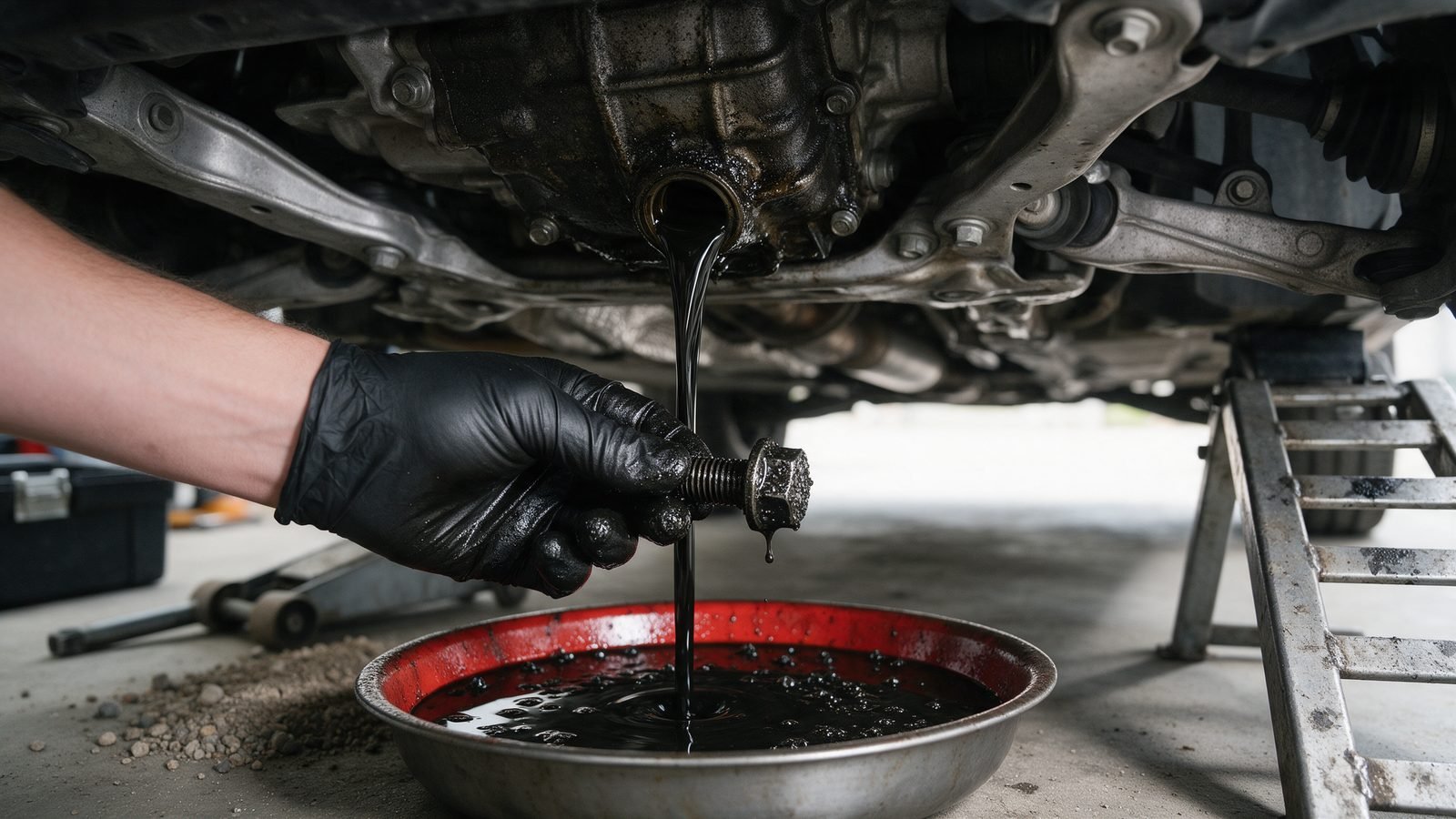
The drain and refill is the core of it. Old oil comes out through the drain plug, the magnetic plug is checked for metal, and fresh oil of the correct grade goes in to level. Grey paste on the plug is normal wear, bright flakes or chips are not, so ask for it to be recorded.
A technician then checks the casing and driveshaft seals for leaks, the mounts for collapse, the linkage bushes or cable adjustment, and your pedal travel and fluid level on a hydraulic clutch. Collapsed mounts and worn bushes give you a bad gear change on a healthy gearbox, the commonest reason a suspected gearbox fault turns out to be neither the gearbox nor the clutch.
How do you tell a clutch problem from a gearbox problem
A clutch problem changes with engine load, a gearbox problem changes with road speed, and a linkage or hydraulic problem changes with what you do at the lever or the pedal. Those three tests separate most faults before your car goes near the ramp.
Clutch wear shows itself under load. Your revs climb without matching acceleration on a brisk pull away or a hill in too high a gear, the bite point moves high up the pedal travel, hot friction material smells after a hard pull, and the car judders from rest.
Gearbox wear follows the wheels. A whine that changes pitch with road speed, and holds steady when you dip the clutch and coast, comes from bearings or gear teeth in the box. Trouble selecting one gear points at its synchromesh, and grinding on the same change is that fault further on. Jumping out of gear under power points at worn detents, worn gear dogs or a failed mount.
Linkage and hydraulic faults feel vague. A lever with free movement and no clear gate is a bush or cable problem, and a pedal that sinks to the floor or stays down after you lift your foot is a hydraulic or release mechanism problem. The clearest test is the engine: if gears select cleanly with it off but fight you with it running, the clutch is not releasing, and the fault sits in the hydraulics, the release bearing or the clutch assembly, not the gearbox.
A rumble or squeal that appears or disappears as you press the clutch pedal is the release bearing, not the gearbox and not the friction plate.
A road test and a session on engine diagnostics settle it where your symptoms overlap, because a misfire under load mimics clutch slip closely enough to send you to the wrong job. Once the fault has a name, your next decision is what else to do while the gearbox is off.
Why is a clutch job the right time to service the gearbox
A clutch job is the right time to service the gearbox because the expensive part of a gearbox service is the labour, and a clutch job has already paid for it by taking the gearbox off the engine. The oil is already out and the input shaft seal is in plain sight.
The driveshafts come out of the gearbox, which releases gear oil whether anyone intends it or not, and the box is separated from the engine and lowered on a jack with your car high on the ramp. Fresh oil at that point costs you the oil and almost no labour.
The input shaft seal is the bigger win for you. The seal sits behind the release bearing where the input shaft enters the bellhousing, and a weeping seal drips oil onto the friction surface and contaminates your new plate. Renewing it while the box is off takes minutes. Renewing it afterwards costs you a second day off the road.
The same reasoning covers the release bearing, the slave cylinder inside the bellhousing, the spigot bearing, the gearbox mount and the driveshaft gaiters. Every one is cheap on its own and expensive to reach, so fitting a new plate and leaving a tired release bearing behind it is the commonest false economy in the job.
Not sure whether the clutch or the gearbox is at fault?
Describe what your car does and when. Ring CF3 MOT and Service Centre on 07400 454839 and say whether the noise follows the engine or the road, and whether the pedal or the lever feels wrong. A short road test at the Rumney workshop on Wentloog Road separates the two faults.
Does a manual gearbox need an oil change
A manual gearbox does need an oil change, and your vehicle manufacturer sets the interval rather than one industry rule, which is why two cars of the same age and mileage carry different schedules. Some makers publish a figure in the service book, others describe the fill as lifetime, meaning the design life of the gearbox and not the life of your car.
The oil lubricates the shaft bearings, cools the gear teeth, carries away the metal normal wear produces, and feeds the synchromesh cones that let you change gear without a clash. Oil that has sheared down and filled with fine metal stops doing the last of those four jobs first, which is why a tired fill reaches you as a stiff change long before a noise.
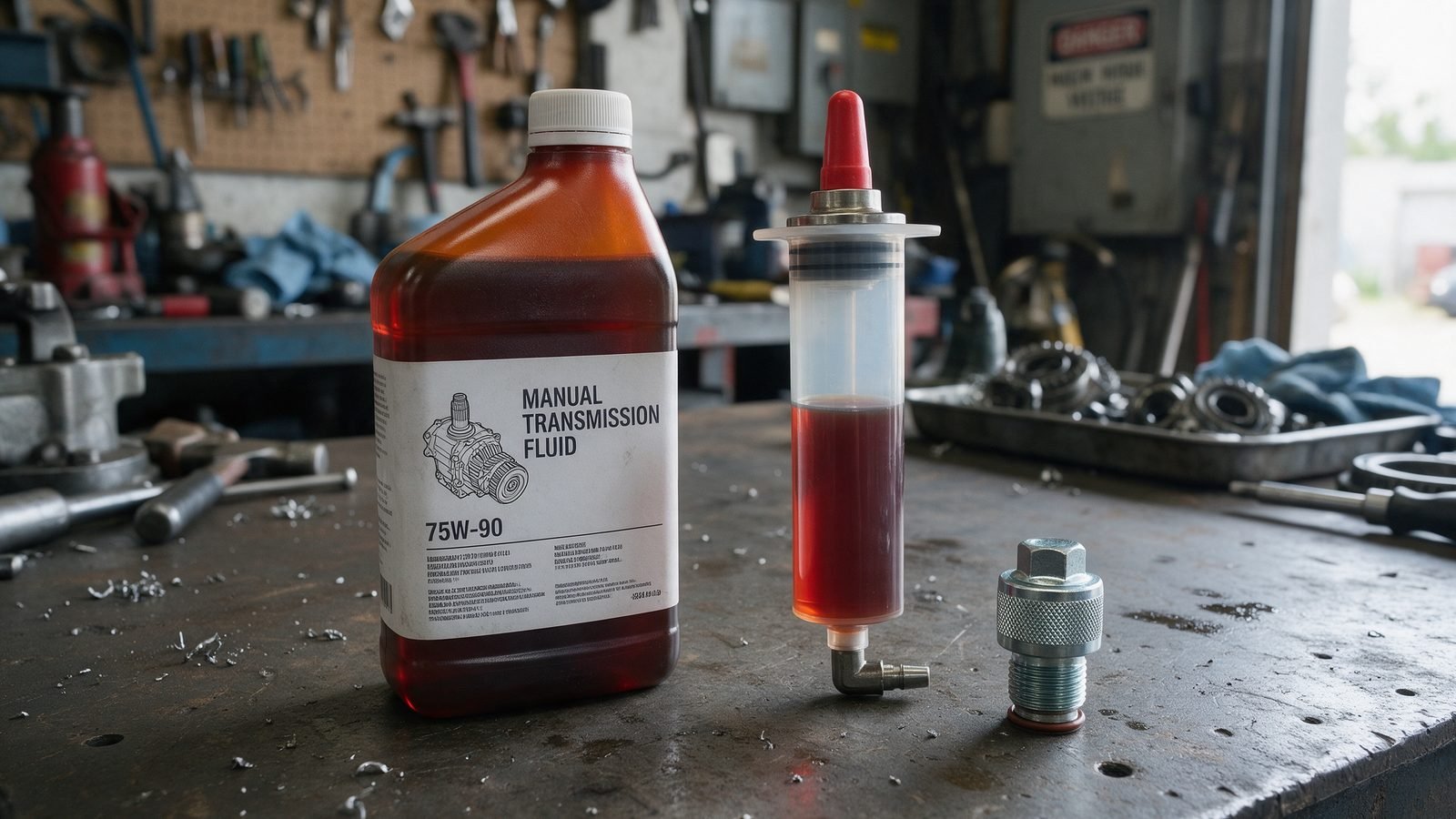
Specification matters more than brand. Your gearbox takes manual transmission fluid or gear oil to a named manufacturer approval, and the wrong viscosity or friction modifier gives you a notchy cold change and premature synchromesh wear. Engine oil and automatic transmission fluid are not substitutes, and pouring either in does real damage. The published interval is only half the answer, because your gearbox tells you when its oil is finished long before the mileage does.
What are the signs the gearbox oil needs changing
The signs your gearbox oil needs changing are a change gone stiff when cold, a crunch on one gear that clears as the car warms up, a new whine at road speed, and oil around the driveshaft seals. Mileage on its own is not the trigger.
Cold stiffness is the earliest sign. A box that fights you into second gear for the first mile and behaves normally afterwards has lost either its cold flow or its additive package. Running hides it, so you ignore the fault for months.
A wet and grimy casing joint, a damp driveshaft seal, or a patch on your drive where the car stands all mean the level is dropping, and a gearbox run low on oil destroys its own bearings. Check the level, find the leak, repair it, then change the oil. Oil work is the cheap end of this subject, and the clutch decides how long your car sits off the road.
What does a clutch replacement actually involve
A clutch replacement involves separating the gearbox from the engine, replacing the three parts of the clutch assembly, inspecting or replacing the flywheel, and reassembling the drivetrain with the gearbox refilled and the hydraulics bled. On most front wheel drive cars the gearbox comes away downwards or sideways with the engine supported from above.
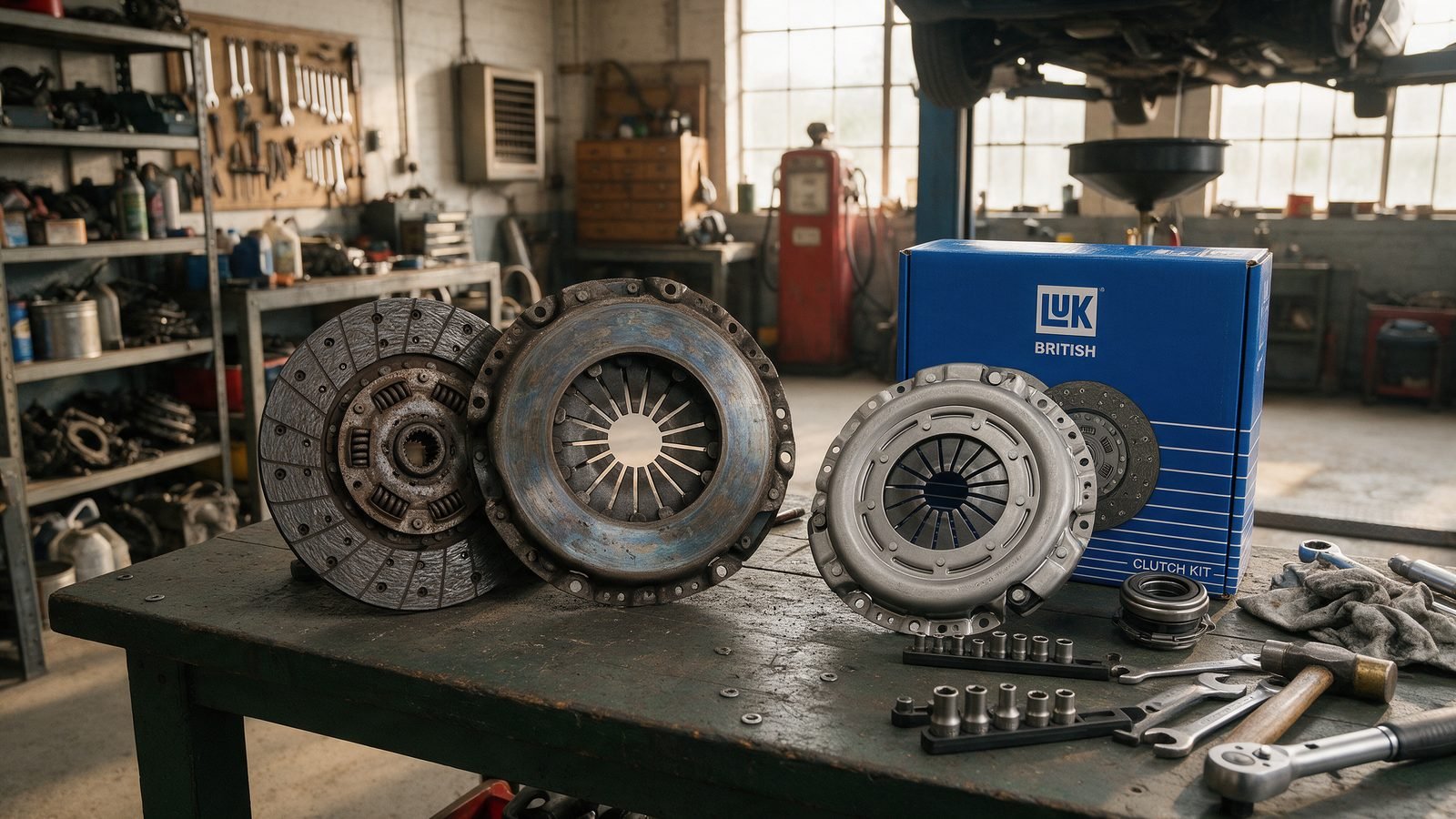
The three replaced parts are the friction plate, the pressure plate assembly, often called the clutch cover, and the release bearing. All three wear together, which is why they come as one kit, and a new plate against an old pressure plate gives you judder and a short service life.
The flywheel decides how large your bill becomes. A solid flywheel is inspected for heat cracking and scoring, then skimmed or replaced where the friction face has gone. A dual mass flywheel is checked for rotational free play, rattle and heat damage, and a worn one is replaced rather than machined, which is where the price difference comes from.
The friction plate is then centred on the input shaft so the gearbox goes back without hanging on the splines, the splines take high temperature grease in a thin film, every bolt goes to its torque figure, the gearbox is refilled to level, and a hydraulic clutch is bled before your car comes off the ramp. The page on clutch replacement in Cardiff sets out what the job covers at the workshop. That list is why two quotes for the same car differ so much.
What drives the cost of a gearbox and clutch job
The cost of a gearbox and clutch job is driven by labour access, the flywheel type, the parts bundled in with the clutch, and the oil specification, in roughly that order of effect on your invoice.
Access is the largest single factor. A transverse gearbox in a small hatchback comes out in a few hours, while the same job on a four wheel drive car, a longitudinal rear wheel drive layout, a van, or a car where the subframe has to come down takes considerably longer, and labour hours make up most of your invoice.
The flywheel comes next. A dual mass flywheel costs several times a solid one, and leaving a worn one in place to save money gives your new clutch judder and rattle it never had.
Then come the small parts that make the job right: gear oil to the correct approval and quantity, the input shaft seal, the release bearing, a concentric slave cylinder where one is fitted, a master cylinder where your pedal has been sinking, the spigot bearing and the gearbox mount. One booking for the clutch and the oil change removes a second round of labour, your one real saving on the job.
How much does a clutch replacement cost
A clutch replacement cost £670.82 on average across UK jobs booked through FixMyCar, in price data published on 1 August 2025, and replacing the clutch together with a dual mass flywheel averaged £1,082.95 in the same data set. Both are national averages across all makes and models.
The gap between the two figures is the dual mass flywheel. A car fitted with one, which covers most modern diesels and a large share of turbocharged petrols, carries the higher figure once the flywheel has worn. Confirming which flywheel your car uses is part of quoting your job honestly. Our guide to clutch and flywheel replacement in Cardiff sets out exactly what the bench check looks for.
Prices move so ring for today’s figure on your own car, with your registration to hand, on 07400 454839. A national average is not a quote for your vehicle.
No published figure covers a manual gearbox oil change or a gearbox rebuild on a like for like basis, so none appears here. Oil cost depends on the approval your gearbox needs and the quantity it holds, and a rebuild on which bearings, gears or synchromesh rings have failed.
Want a firm price before you commit?
Ring 07400 454839 with your registration and a short description of what your car does. Ask for the clutch, the flywheel and the gear oil as separate lines, so you see what each one adds. Where a diagnosis is needed first, the inspection is priced before parts are ordered.
How long will the car be off the road
A clutch replacement takes a full working day on most cars, and longer where the subframe has to be lowered, the car is four wheel drive, or a seized component has to be cut out. Your car holds the bay from the morning drop off to the end of the day. A gearbox oil change takes well under an hour, and both jobs together take almost exactly as long as the clutch alone.
A gearbox rebuild or an exchange gearbox runs into several days, because the unit has to be stripped and measured or sourced and delivered. Ring the workshop for a realistic slot rather than planning around a guess. CF3 runs courtesy cars subject to availability, the practical answer where you need your car for work. Both answers depend on a quote built from a diagnosis rather than a guess.
Gearbox and clutch work at CF3 MOT and Service Centre in Rumney
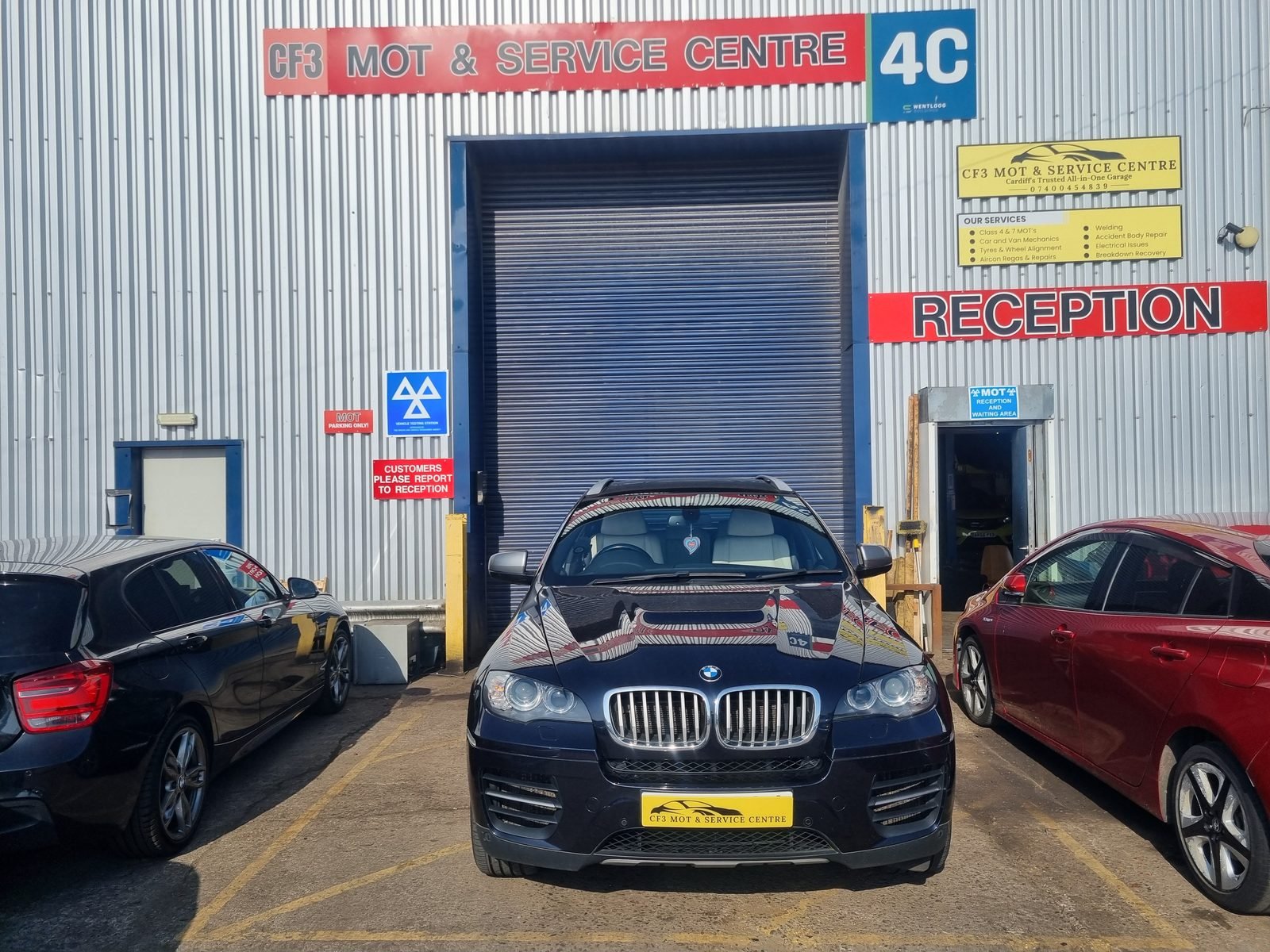
CF3 MOT and Service Centre is a DVSA approved MOT test centre and all makes garage at Unit 4C Wentloog Buildings, Wentloog Road, Rumney, Cardiff CF3 1TH. Clutches are one of the workshop’s regular jobs, alongside cambelts, wet belts, diagnostics and DPF work. Ali is the owner and lead technician, and one named owner who quotes and signs off every job means you deal with the person answerable for your bill.
Your quote starts with a diagnosis, not a parts list. A technician road tests your car, finds whether the fault sits in the clutch, the gearbox or the linkage, and prices the work from there. Where the gearbox is coming off, the gear oil, the input shaft seal and the release bearing are quoted in the same visit so you do not pay that labour twice.
The site is about 10 minutes from Cardiff city centre, 5 minutes off the A48 and 12 minutes from junction 30 of the M4, which puts St Mellons, Llanrumney, Pentwyn, Splott, Roath, Cardiff Gate, Caerphilly and Newport within an easy run. Evening and Saturday appointments, collection and delivery and recovery are available subject to availability, so you can drop off before work or on a Saturday. The Rumney garage page covers directions and opening arrangements.
Gearbox and clutch questions
Can a gearbox oil change fix a crunchy gear change?
A gearbox oil change fixes a crunchy change where the cause is worn or incorrect oil, which covers a large share of cold second gear crunches. Where the synchromesh ring or the gear dogs are worn instead, fresh oil improves the feel briefly and your crunch returns. The drain plug and a road test separate the two.
Will a worn clutch fail the MOT?
The MOT test does not examine clutch wear, so clutch condition forms no part of your pass or fail decision. The test covers brakes, lights, steering, suspension, tyres and emissions, at the £54.85 maximum class 4 fee published on gov.uk and checked on 9 October 2026. A slipping clutch is still a repair worth booking.
What is a dual mass flywheel and how do I know whether my car has one?
A dual mass flywheel is built in two halves joined by springs and friction elements, fitted to absorb engine vibration before it reaches the gearbox. Most modern diesels and many turbocharged petrols use one, and your registration and engine code confirm which type your car is fitted with.
Why does my clutch pedal feel soft and sink to the floor?
A clutch pedal that feels soft and sinks to the floor points at the hydraulic circuit rather than the friction plate. Fluid leaking past the master cylinder seals, past the slave cylinder seals, or out of a swollen hose gives the same soft pedal. Check your reservoir level, then have the circuit pressure tested.
Can I keep driving with a slipping clutch?
Driving on a slipping clutch wears the friction plate faster and adds heat that damages the pressure plate and the flywheel face, turning your clutch kit into a clutch and flywheel job. A clutch that slips under heavy load is near the end of its life. Book the work before the plate strips to the rivets.
What is the difference between a gearbox rebuild and an exchange gearbox?
A gearbox rebuild strips your own unit, replaces the failed bearings, gears or synchromesh rings, and reassembles it to tolerance. An exchange gearbox swaps your unit for a remanufactured one carrying a supplier warranty. A rebuild suits an uncommon box with one failed part, an exchange a common box with widespread wear.
Booking the right job the first time
A road test separates the three faults quickly, so match the symptom to the system before you book: load for the clutch, road speed for the gearbox, lever and pedal for the linkage and the hydraulics. Booking on a guess is what leads to paying twice.
Bundle the gear oil, the input shaft seal and the release bearing into that same visit where the gearbox is coming off the engine, because the labour is already paid for.
Book your car in at CF3 MOT and Service Centre on 07400 454839, or through the booking form on the contact page, and ask for a firm price against your registration. The workshop sits at Unit 4C Wentloog Buildings, Wentloog Road, Rumney, and the garage tells you what it found before it does the work.
Find out whether it is the clutch or the gearbox
Ring CF3 MOT and Service Centre in Rumney on 07400 454839, or book through the widget above. The car is driven, the gearbox is checked and you are told which of the two jobs it needs before any work starts.

